Series LLC vs standard LLC
Summary: A Series LLC lets you set up multiple "cells" or "series" under one umbrella LLC. Each one has its own assets, liabilities, and members. A standard LLC is just a single entity. Real estate investors tend to like Series LLCs. But only 16 states recognize them, and banks and courts don't always treat them the same way.
Contents
If you invest in real estate, you've probably heard of Series LLCs. They sound like a shortcut. One LLC with unlimited "cells," and each cell holds a different property. Each cell is shielded from what happens in the others. So one lawsuit can't wipe out your whole portfolio.
That's the promise. Reality? Messier. Only 16 states recognize Series LLCs. Banks don't always get them. Courts haven't treated them the same way. And say you form one in Delaware but hold property in California. You might have a problem.
Here's what you should know before you make up your mind.
Quick comparison
| Factor | Standard LLC | Series LLC |
|---|---|---|
| Number of Entities | One entity | One parent + unlimited series |
| Asset Protection | Single entity (all assets at risk) | Each series protected from others |
| Formation Cost | One filing fee | Higher filing fee + fee per series |
| Annual Fees | One annual report fee | Higher annual fee + fee per series |
| State Recognition | All 50 states | Only 16 states |
| Banking | One bank account | Separate account per series (difficult) |
| Court Precedent | Well-established | Unclear, inconsistent |
| Complexity | Simple | Complex |
What is a series llc?
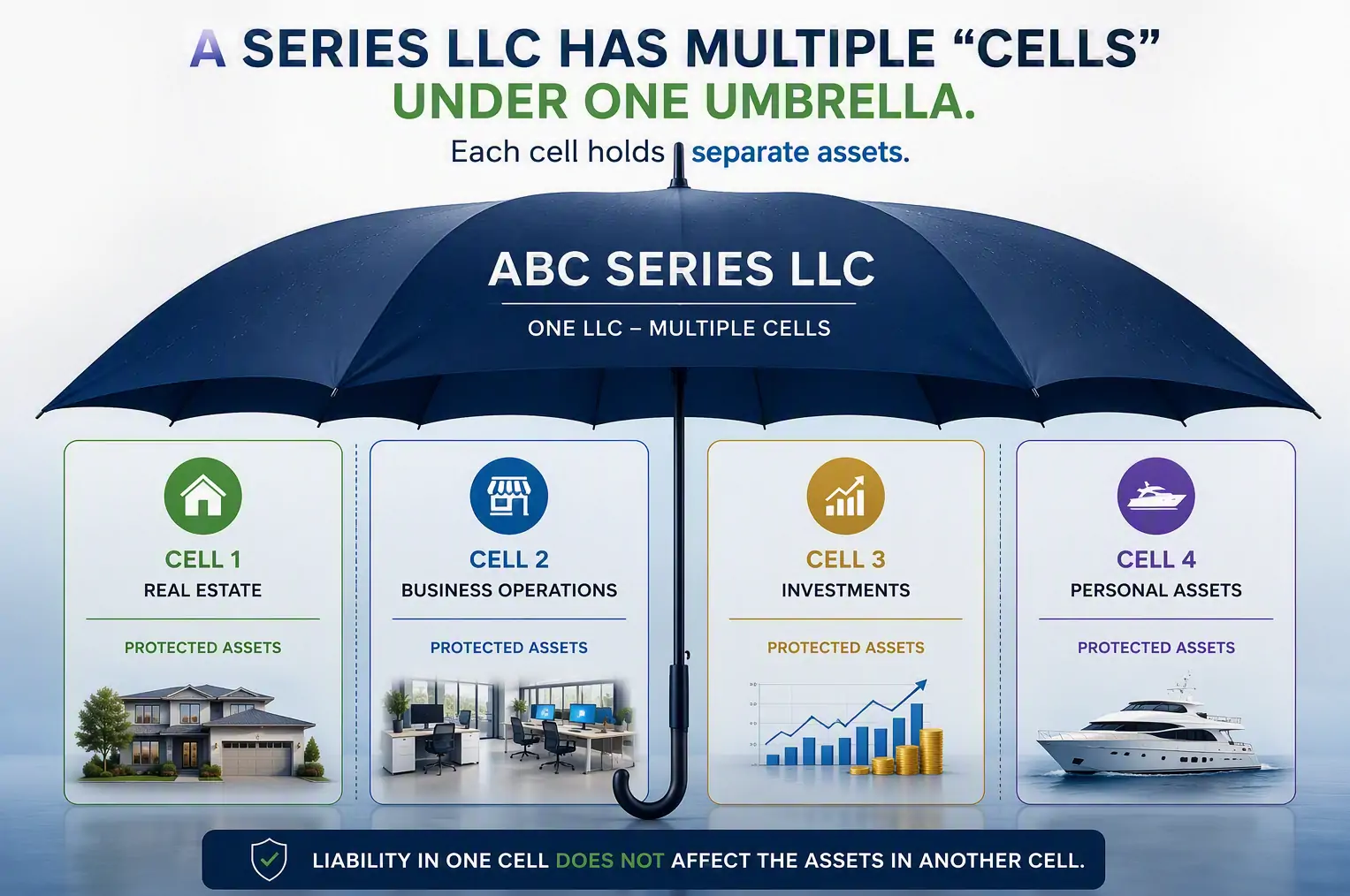
A Series LLC is a special kind of LLC. It lets you set up separate "series" or "cells" under one umbrella. Each series can have its own assets, its own liabilities, its own members, and its own management. The idea here is simple. Each series stays protected from what the others owe.
Think of it like a building with separate apartments. Each apartment has its own tenant, its own lease, and its own problems. If one apartment floods, the others aren't affected. A Series LLC is the same concept for business entities.
Who uses them:
- Real estate investors who own more than one property
- Venture capital firms that run more than one fund
- Franchise owners with multiple locations
- Any business with multiple, separate operations
States where Series LLCs are allowed:
- Alabama
- Delaware
- Illinois
- Indiana
- Iowa
- Kansas
- Missouri
- Montana
- Nevada
- North Dakota
- Oklahoma
- Tennessee
- Texas
- Utah
- Virginia
- Wyoming
If your state isn't on this list, you can't form a Series LLC there. You'd have to form one in a state that allows it, like Delaware or Wyoming, then register as a foreign entity in your home state. Delaware vs Wyoming LLC covers the pros and cons of each formation state.
Texas LLCs are a big draw for Series LLCs. Texas allows them, and there's no franchise tax. Nevada works too, but you'll pay more.
What is a standard llc?
A standard LLC is the default structure you're probably used to. It's one entity with one or more members. One set of assets, one set of liabilities, one bank account. If someone sues your LLC, all your business assets are on the line.
Who uses them:
- Freelancers, consultants, and solo founders
- Small businesses with one location or operation
- Any business that doesn't need to protect assets separately for different divisions
Standard LLCs are simpler and cheaper, and every state recognizes them. You won't have to worry about a court not recognizing your entity structure. The law is well established. Single member vs multi member LLC covers the choice within standard LLCs.
Asset protection differences
This is the biggest selling point of Series LLCs. In theory, each series is protected from the liabilities of every other series. If one property gets sued, the other properties in other series are safe.
How it works in practice:
- You set up a parent LLC (the "umbrella")
- Each subsidiary "series" holds one asset. That could be one property, one franchise location, and so on.
- Each series has its own books and records. It has its own bank account too.
- If Series 1 gets sued, only its assets are on the line
The catch:
- No federal tax recognition. The IRS doesn't recognize Series LLCs. For taxes, you file as one entity. That's good because there's less paperwork. But it's also bad because things get less clear.
- Courts haven't really tested it yet. The liability shield between series? It hasn't been through the courts much. If you don't keep things separate, some judges might "pierce the veil" between your series.
- Creditor confusion. If a creditor sues your Series LLC, they might argue all the series are really one entity. The law is still up in the air.
For the best protection, you've gotta keep each series totally separate. That means separate bank accounts, separate books, separate operating agreements, and separate members if you can swing it. How to keep your LLC compliant matters even more with a Series LLC, since the protection hinges on having the right paperwork.
Why a LLC won't protect you from lawsuits is true for Series LLCs too. Skip the corporate formalities and your protection is gone.
State recognition
This is the biggest real world problem with Series LLCs. Just 16 states recognize them. Form a Series LLC in Delaware, hold property in California, and you've got a problem.
The issue:
- You need to register as a foreign entity in any state where you do business
- If the state doesn't recognize Series LLCs, they might not register your series
- You could end up with your assets held in an entity that isn't registered
Some states, California for example, will register a Series LLC. But they make each series file on its own and pay its own fees. So you lose the whole cost benefit of having a Series LLC.
If you invest in real estate across multiple states, a Series LLC turns into a compliance headache. Home state vs Delaware LLC lays out the framework for that call. Same logic holds for Series LLCs.
Cost comparison
Series LLCs cost more. Here's why:
| Cost Type | Standard LLC | Series LLC |
|---|---|---|
| Filing Fee | $50-$500 (one time) | Higher than standard ($100-$800) + fee per series |
| Annual Report | $25-$500 per year | Higher base fee + fee per series |
| Registered Agent | $99-$299 per year | Same as standard (one agent covers parent + series) |
| Accounting | Simple (one set of books) | Complex (separate books per series) |
| Legal Setup | Simple (one operating agreement) | Complex (parent + each series) |
Got 5 rentals? A Series LLC saves you from paying filing fees for 5 separate LLCs. But it's more complex and costs more to run. Every cost of starting a LLC breaks down what you'd pay for standard LLCs.
Banking and lending
This is where Series LLCs get painful. Banks don't like them. They're confusing. The legal structure is unfamiliar. And lenders have to figure out which entity to lend to and which entity holds the collateral.
Practical problems:
- Keep your bank accounts separate. If you want that liability shield to hold up, every series needs its own account. Banks just aren't built to deal with one parent company that has a bunch of sub entities. So yeah, it gets messy.
- Financing gets complicated. When you want a mortgage on a property, the lender needs to know which entity owns it. Some lenders will lend to Series LLCs. Others won't.
- Title insurance. Title companies get confused too. They have to verify the entity structure. A lot of them will charge more or just won't work with Series LLCs.
- Escrow. Real estate agents might have a hard time with the entity structure too.
These are real problems people deal with. How to open a business bank account after LLC formation is hard enough. Series LLCs? Even worse.
Some founders use a standard LLC for their main operations and separate single member LLCs for each property. It costs more upfront. But banking and lending get a lot simpler.
Which one makes sense for you
Go with a standard LLC if:
- You're a solo founder or freelancer
- You have one business operation
- You're in a state that doesn't recognize Series LLCs
- You plan to borrow money from banks (they prefer standard LLCs)
- You want things simple and clear
Go with a Series LLC if:
- You're a real estate investor with 5+ properties
- You're in a state that recognizes Series LLCs
- You plan to keep properties in the same state
- You've got a good lawyer and accountant who get Series LLCs
- You're willing to keep separate books and bank accounts for each series
If you're not sure, talk to a lawyer who knows Series LLCs. Whether you need an operating agreement is a no brainer for Series LLCs. You need one that covers the parent and every series.
Also think about this: you can set up a Series LLC in Delaware or Wyoming and then register in your home state. LegalZoom vs Northwest Registered Agent can help you pick a service that deals with Series LLCs. Not every service supports them.
Finally, look at the cost. Got 5 properties? The math is easy. 5 standard LLCs means 5 filing fees plus 5 annual reports. 1 Series LLC means 1 filing fee plus 5 series fees. If those series fees are low, a Series LLC wins. If they're high, separate LLCs might be cheaper. DIY filing vs using a service covers the cost trade offs.
Frequently asked questions
A Series LLC is a special kind of LLC. It lets you set up separate "series" or "cells" under one umbrella. Each series can hold its own assets and liabilities. So if one series gets sued, the others are protected. That's the whole point.
Only 16 states recognize Series LLCs. Delaware, Wyoming, Texas, Nevada, Illinois, and Virginia are some of them. If your state doesn't recognize them, you can form one in Delaware. Then you register as a foreign entity in your home state.
It depends. If you've got multiple properties or operations, a Series LLC gives you better asset protection. But they cost more, they're more complex, and only 16 states recognize them. For most small businesses, a standard LLC is the better call.
Yes, but it's harder than a standard LLC. Each series needs its own bank account to keep the liability shield. Some banks won't work with Series LLCs at all. Others charge extra fees.
No. The IRS doesn't recognize Series LLCs. For federal tax purposes, you file as a single entity. That's good, since there's less filing complexity. It's also bad, since the liability shield is less clear.