Why a LLC won't protect you from lawsuits
Contents
a LLC shields you from a lot, but it’s not a magic bullet against every lawsuit. Plenty of owners think it’s stronger than it is, and that can get expensive. The hidden risks of sole proprietorship mirror what you face with a LLC you don’t keep up.
Nolo notes: "a LLC limits your personal liability for business debts, but it doesn't protect you from personal misconduct or from piercing the corporate veil."
What limited liability actually means
a LLC gives you the liability shield of a corporation but the tax flexibility of a partnership. In most states, members usually aren’t personally on the hook for the business’s debts or obligations. Inc Authority and similar services can help you set one up, but keeping that protection is on you.
Creditors or lawsuit plaintiffs can usually only go after the LLC's assets, not your personal stuff like homes, cars, or bank accounts. That's often called the "corporate veil" or "liability shield." It covers everyday business contracts, most operational debts, and lots of third-party claims. The California Secretary of State puts it this way: "a LLC is a separate legal entity from its owners. This separation has limited liability protection."
However, this protection has limits. Courts and statutes carve out plenty of exceptions. The New York Department of State notes: "LLC members may be personally liable if they fail to maintain the LLC as a separate entity."
Piercing the corporate veil
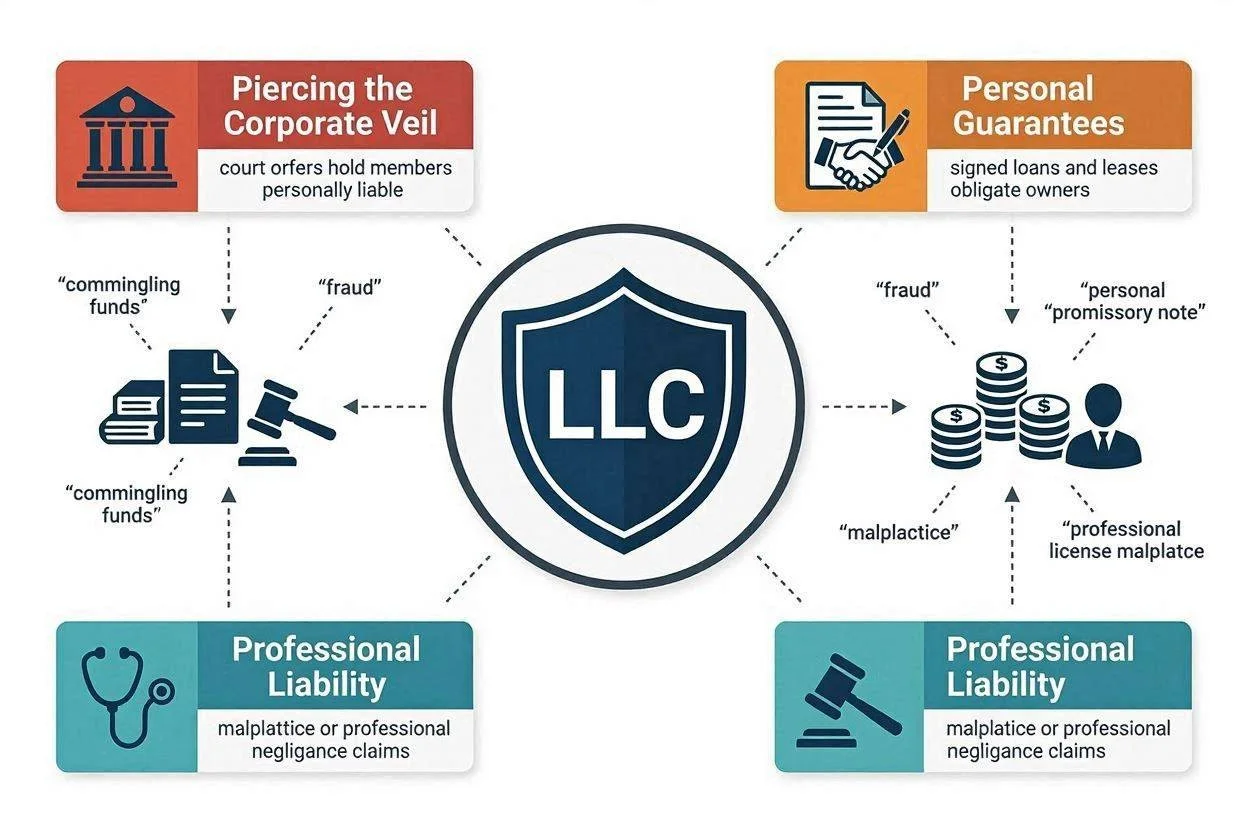
Courts can "pierce the veil" and go after members personally if the LLC isn't treated as its own thing, separate from the owners. It's an equitable fix for when the LLC structure gets abused. How to keep your LLC compliant covers the formalities you need to keep up with to avoid that.
Common factors courts consider. Commingling assets, like using business funds for personal stuff or the other way around, is the biggest one. Then there's undercapitalization, which means you started or ran things without enough cash to handle risks you could see coming. Not following formalities? That covers no operating agreement, sloppy records, no separate bank account, or just treating the LLC like your own piggy bank. Sole domination matters a lot in single-member LLCs, where one person calls all the shots with zero separation. And fraud or injustice? That's when the LLC gets used to do something shady or leave creditors hanging while you pocket the benefits.
Real-world examples. In one Iowa case, a court pierced the veil where the owner commingled funds, used the corporate account for personal purchases, and failed to keep things separate. Alabama and other cases involved owners who knew the entity was underfunded, misrepresented finances, or used company money for personal luxuries. Extreme cases show owners ignoring capitalization, records, and separateness altogether, which led to personal judgments. Wolters Kluwer notes: "Piercing the corporate veil is 'extraordinary' and not granted lightly, but sloppy practices by small business owners increase the risk."
Personal guarantees
If you personally guarantee a business loan, lease, or contract, the LLC won’t shield you on that debt. Lenders can come after your personal assets if you default. Same deal if you put up personal property as collateral. Why a LLC won't protect you from lawsuits gets misunderstood a lot when personal guarantees are involved.
Tax liabilities, especially employment taxes. Payroll and employment taxes can create personal liability. "Responsible persons," often owners or managers, can face personal liability for unpaid trust fund taxes via the Trust Fund Recovery Penalty. This applies even to LLCs. Single-member LLCs historically carried higher risk. Unpaid taxes can still lead to personal exposure. The IRS states: "The Trust Fund Recovery Penalty may be assessed against individuals who are responsible for withholding and paying employment taxes."
Your own wrongful acts
a LLC won’t shield you from liability for your own actions. If you personally commit negligence, malpractice, fraud, or another tort, you’re still on the hook. Why a LLC won't protect you from lawsuits gets clearest when we’re talking about your own misconduct.
Examples include. Causing an accident through reckless driving in a company vehicle. Providing bad professional advice leading to client losses. Intentional fraud or misrepresentation. Professional services like doctors, lawyers, and accountants aren't shielded from malpractice claims arising from professional negligence. You often need Errors and Omissions or professional liability insurance. General LLC protection addresses the business entity but not individual professional errors.
Other exceptions and risks. Illegal or ultra vires acts, criminal activity, or stuff beyond what the LLC is set up to do. Environmental liabilities, or certain statutory violations, like some wage and hour laws. If someone sues a member personally, they can get a charging order against your LLC interest. Multi-state operations? Each state has its own LLC rules and veil piercing standards. And courts might sometimes lump related entities together for liability.
How to maximize protection
a LLC is a solid start, but you’ve got to stay on top of it. Comparing Inc Authority vs. ZenBusiness can help you pick a formation service, but keeping that protection is all on you.
- Keep things totally separate. Separate bank accounts, credit cards, and records. Document every transaction.
- Follow formalities. Have a solid operating agreement, hold meetings, and keep minutes and records.
- Make sure the business has enough capital for what it's up against.
- Avoid personal guarantees when you can; negotiate limits.
- Carry the right insurance. General liability, professional liability, workers' comp. It's often your real first line of defense.
- Talk to the pros. Work with attorneys and accountants for formation, compliance, and ongoing advice.
- Consider additional structures like series LLCs in some states for high-risk businesses.
- Stay compliant with taxes and regulations.
Frequently asked questions
No. a LLC shields you from business debts and most contracts, but it won’t cover your own negligence, fraud, or other personal screwups. It also leaves you exposed on personal guarantees and unpaid payroll taxes.
Piercing the corporate veil is when a court decides your LLC's liability shield doesn't apply, so you're personally on the hook for business debts or lawsuits. That usually happens when you didn't treat the LLC like its own thing, like mixing your money with theirs or skipping the paperwork.
Yes, single-member LLCs get more scrutiny. It’s harder to prove you’re separate. Courts will pierce the veil faster if you mix personal and business money.