Texas LLC formation, series llcs, franchise tax, and veil piercing
Contents
- Series LLCs: Protected vs. Registered Series
- Franchise Tax Optimization Plays
- Veil Piercing is Texas-Strict
- Formation Speed and speed up Hacks
- Public Information Reports (PIRs) are a sneaky compliance tool
- Estate Planning & Multi-Property Superstructures
- Texas vs. Out-of-State Formation Realities
- Frequently Asked Questions
Texas LLCs get you no state income tax, a solid Series LLC statute, and a business friendly vibe. But there's a $300 formation fee and franchise tax quirks to watch. So here's some fresh, under the radar angles for 2026 that skip the usual "no income tax" spiel.
If you’re scaling a physical or asset heavy business, Texas gives you some structural advantages most founders miss. For a bigger picture on how Texas stacks up against other states, our Texas vs California LLC comparison shows a clear contrast in tax and regulatory approaches.
1. Series llcs with protected vs. registered series (the strategic fork)
Texas was the first to really nail down strong Series LLCs. You can set up protected series, which are internal only, just through your company agreement, no extra filing needed. Or you can go with registered series, where you file with the SOS for $300 each and get your own filing number.
Creative edge: go with a protected series for real estate or IP isolation. It's cheaper and works fine for most lenders since they just check county recordings. But if you're looking for UCC filings for equipment or inventory loans, that's when you switch to a registered series. This hybrid way keeps costs down while giving you room to scale. And since everything sits under one master LLC, your franchise tax and PIR filings stay in one place.
2. Franchise tax optimization plays (beyond the $2.65m threshold)
For 2026, the no-tax-due threshold sits at $2.65M in annualized revenue. Under that, you still file a Public Information Report (PIR) by May 15. Above it, you pick the best margin method. For retailers, revenue minus COGS usually beats the other options.
Underrated tactics: New 2026 bonus depreciation lines up with federal rules now, and there's a catch-up for older assets if you run a heavy asset business. We run multiple computation methods every year, and the EZ rate (0.331%) can swing either way depending on your margins and COGS. In growth years, we structure things for annualized calculations so you can stay under the threshold longer.
For a deeper look at how states handle compliance, our how to keep your LLC compliant article gives you more context on staying ahead of your filings.
3. Veil piercing is texas-strict (not delaware-loose)
Texas courts won't let you pierce the veil unless you've got actual fraud plus a direct personal benefit. That's the statutory standard, and it's tight. Undercapitalization? Informality? On their own, they don't get you there. The Business Court's recent rulings just hammer that home.
Creative protection strategy: document everything with a strong company agreement, separate accounts, and minutes. That builds a "Texas fortress" reputation when disputes come up. Pair it with insurance and proper capitalization, and you're about as close to ironclad as you can get for keeping personal assets separate.
For more on protecting your personal assets, our why a LLC won't protect you from lawsuits article digs into where liability protection falls short.
4. Formation speed + speed up hacks
Standard online filings (SOSDirect) can take one to three business days, realistically. Texas Express options, like same-day or next-day, are there if you're in a hurry.
Niche play: time filings around franchise tax deadlines or funding rounds. Use the formation date (submission, not approval) strategically for tax years. For multi-entity setups, stagger formations to spread administrative load.
If speed matters, check out our fastest LLC formation service article, we compare options that get you filed fast.
5. Public information report (pir) as a hidden compliance lever
Even zero-tax LLCs still have to file the PIR every year. It lists who runs the company, and you can use it to show you’re legit.
Forward-thinking angle: treat PIR filings like mini brand updates. Update management info before partnerships or lending ask. Pair them with DBA registrations so you run multiple brands cleanly under one entity.
6. Estate planning & multi-property superstructures
Series LLCs are a solid pick for real estate folks. Each series can own properties on its own, so liability stays separate. Pair that with trusts, and you skip probate altogether.
Unique combo: Master Series LLC is owned by a revocable trust, and the company agreement has buy sell triggers that life insurance funds. That keeps succession smooth, all under one franchise tax umbrella.
For real estate investors, our best LLC service for real estate guide digs into how to structure your holdings.
7. Texas vs. out-of-state formation realities
Texas is ideal if you operate here, since it skips foreign qualification. The $300 fee stings, but no annual report, no income tax, and Series LLCs make up for it for a lot of folks. If you're a non-resident, though, weigh it against cheaper states unless Texas nexus is just unavoidable.
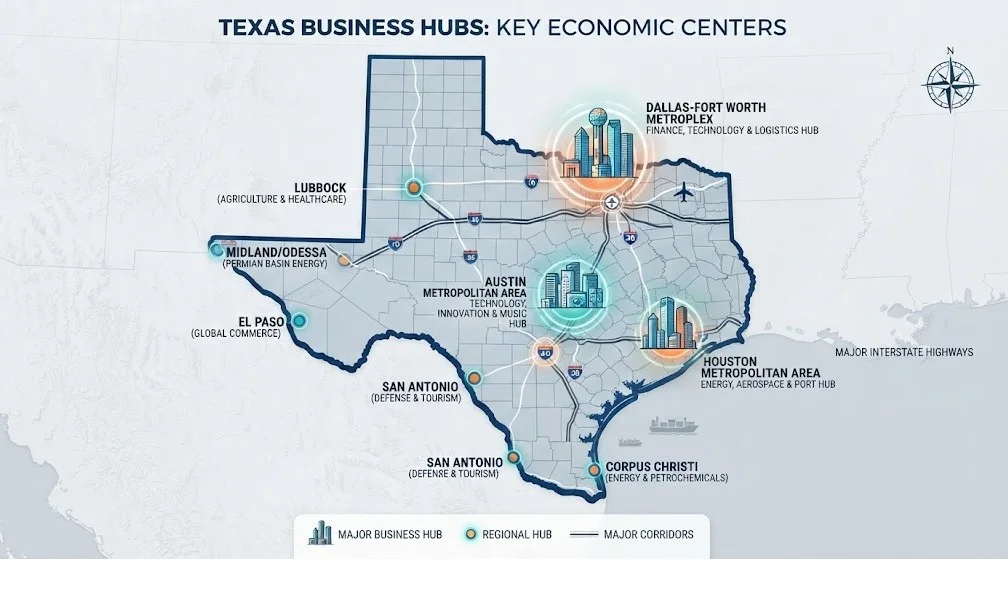
Emerging niche: tech, energy, and green businesses that tap into Texas incentives, infrastructure, and talent. The state’s huge, so you get natural diversification across regions. Austin’s tech, Houston’s energy, Dallas’s finance.
For founders weighing Texas against other options, our home state vs Delaware LLC comparison offers an useful perspective.
If you're hunting for a service to file with, Inc Authority gives you a free package (you just cover the state fee), and their registered agent add-on is a solid pick. ZenBusiness runs a similar deal, though their upsells can get a bit messy. For an Analysis, our Inc Authority review covers what you get.
Texas rewards operators who actually put the Series LLC statute to work, fine tune their franchise tax approach, and stick to strict formalities. It’s not the cheapest or the most private, but it’s a powerhouse for scaling physical or asset heavy businesses. And with the 2026 updates, like the higher threshold and bonus depreciation, it gets even more tempting for companies on the upswing.
Always check with the Texas Comptroller and Secretary of State for your exact situation, and tweak your company agreement a lot. This isn't one size fits all, so make it fit your industry and size. For the bigger picture on starting a LLC, our first 30 days after forming a LLC guide comes in handy.
Frequently asked questions
No. Texas doesn’t have a state personal or corporate income tax. But LLCs do owe a franchise tax if their annualized revenue goes past $2.65 million.
A protected series gets set up internally through the company agreement, no state filing involved. A registered series, though, you file with the Secretary of State, it costs $300, and you get your own filing number. That number's a must for certain UCC filings.
The state filing fee for the Certificate of Formation is $300. You'll also need to budget for a registered agent service if you don't want to use your own address.
The no-tax-due threshold sits at $2.65 million in annualized revenue. If you're under that, you still have to file a Public Information Report (PIR), but you won't owe any tax.
Texas courts keep the bar high. They want actual fraud and a direct personal benefit, not just a hunch. Being undercapitalized on its own won't cut it. So you've got to stay on top of those formalities. That's what really matters.