Do you need an operating agreement for your llc?
Contents
Do you need an operating agreement for your LLC? Almost always, yes. Most states won't make you file one with the Secretary of State, but skipping it is a huge gamble. We've watched single-member LLCs get sued and lose personal stuff just because they never had this paper.
An operating agreement is the internal rulebook for your LLC. It lays out who owns what, how decisions get made, and what happens if someone leaves or dies. Without it, your state's default laws step in (and they rarely favor your specific situation).
Think of it like this: you wouldn't start a partnership without a handshake agreement (well, you shouldn't). This is the written, legally binding version of that handshake.
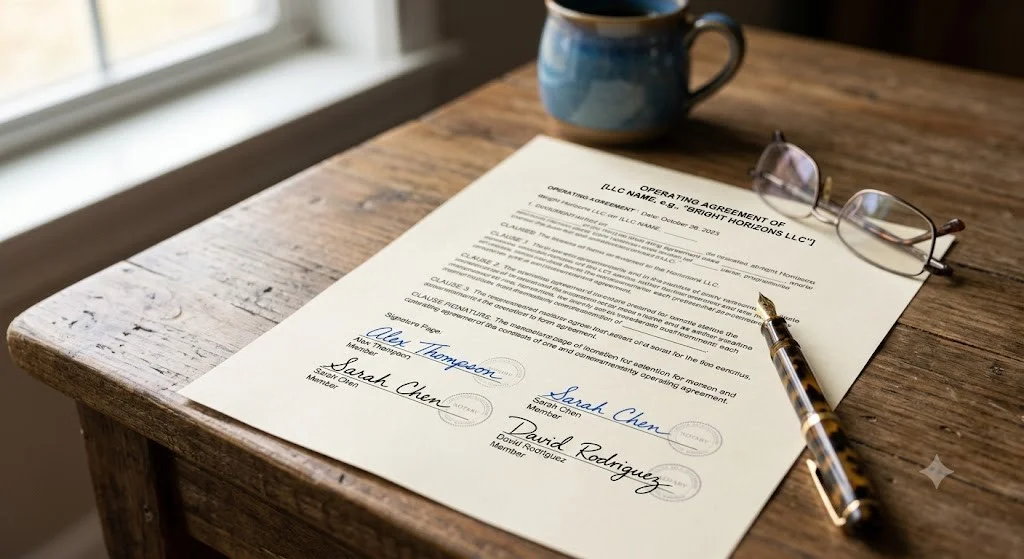
What is an operating agreement?
It’s a contract between the members (owners) of a LLC. It sets the rules for how the company runs and operates. Big thing: it’s internal, so you don’t file it with the state. That’s a key difference from your Articles of Organization, which is your public formation filing.
Most LLC formation services, including Inc Authority and ZenBusiness, throw in a template for free when you form a LLC. Others like Northwest include it too, but some budget providers might tack on a fee. You could also draft one yourself using online templates, though we'd suggest a lawyer look it over if your business is complicated.
Why it's a non-negotiable
Here's the thing: even if you're a single-member LLC, you still need one. Why? Because it helps prove your business is a separate legal entity. That separation is what protects your personal assets if you get sued. Without an operating agreement, a court might rule your LLC is just a "alter ego" of you, and they can go after your house, your car, your savings.
This is what they call "piercing the corporate veil." Courts check your operating agreement first to see if you’re actually running your LLC like a real business.
The California Secretary of State puts it like this: "Although an operating agreement is not required to be filed with the Secretary of State, it is advisable for members to enter into an operating agreement to govern the internal affairs of the LLC." That’s their nice way of saying "you’re an idiot if you don’t."
What happens without one
If you don't have an operating agreement, your state's default LLC laws will govern your business. These are one-size-fits-all rules that rarely fit your business. Here are a few examples of what the default rules look like in many states:
- Profit Sharing: We split profits equally among all members, no matter how much capital each person put in.
- Management: Everyone gets a vote in the day to day stuff. That's a nightmare if you've got a silent investor.
- Transfer of Ownership: You might need unanimous approval from all members to sell your membership interest. This can lock you in.
- Dissolution: The LLC could get forced to dissolve if a member dies, quits, or goes bankrupt.
That last one’s a killer. You spend a decade building something, and then you’re gone. Your family could end up selling it for pennies on the dollar because the default rules won’t let them take over. An operating agreement solves that.
The New York Limited Liability Company Law (LLCL § 417) says you’ve got to adopt a written operating agreement within 90 days of filing your Articles of Organization. In New York, that’s not a suggestion. It’s the law, and you have to follow it.
How to get an operating agreement
You have a few solid options here. We’ll break down the pros and cons.
| Method | Cost | Best For |
|---|---|---|
| LLC Formation Service (Inc Authority, ZenBusiness, etc.) | $0 (included) | Most founders, especially first-timers |
| Online Legal Template | $20-$100 | Simple, single-member LLCs |
| Business Attorney | $500-$2,500+ | Multi-member LLCs, complex ownership structures |
We lean toward the first option. Most reputable formation services throw in a customized operating agreement. Inc Authority and ZenBusiness do that, and they tailor it to your state's laws. Northwest does too, but their real strength is their registered agent service, so that's overkill if you only need the agreement.
If you're forming a LLC, you're probably already using a service for the filing. Getting the operating agreement from the same place is convenient and often free. Just make sure you read it and understand what it says. Don't just sign a piece of paper.
If you want to go the attorney route, that's the gold standard for complex businesses. Lawyers catch things like tax implications, ownership splits, and dispute resolution processes that a generic template might miss. But for most single-member or simple two-member LLCs, a template from a good formation service is perfectly fine.
Once you have it, sign it, keep it in your corporate records, and treat it like the important document it is. You don't need to file it with the state. Just hold onto it.
Frequently asked questions
Not in most states. California and New York are the big exceptions where it's legally required. But even if your state doesn't force you to have one, skipping it is a real gamble. The legal cover it gives you is worth the effort.
At minimum, it should outline member contributions (money or property), ownership percentages, profit and loss distribution, management structure (member-managed vs. manager-managed), and procedures for adding or removing members. It's basically the constitution for your LLC.
You can, but we don't recommend it unless your business is really simple. A template from a solid service like Inc Authority or ZenBusiness is safer. They make sure the document follows your state's LLC rules. For anything complicated, get an attorney.
Nowhere. It’s an internal document. You don’t file it with the Secretary of State or any government agency. Keep the signed original in your business records. Banks might ask for a copy when you open a business account, but you don’t need to file it.