Your first week after LLC approval
Contents
Congrats, your LLC is officially approved. That first week matters a lot, it’s when you turn that piece of paper into something real, compliant, and professional. What to do immediately after LLC approval walks you through day one, but here we’re looking at the whole week.
The IRS states: "Get an EIN right after you form your LLC so you can open bank accounts and file taxes."
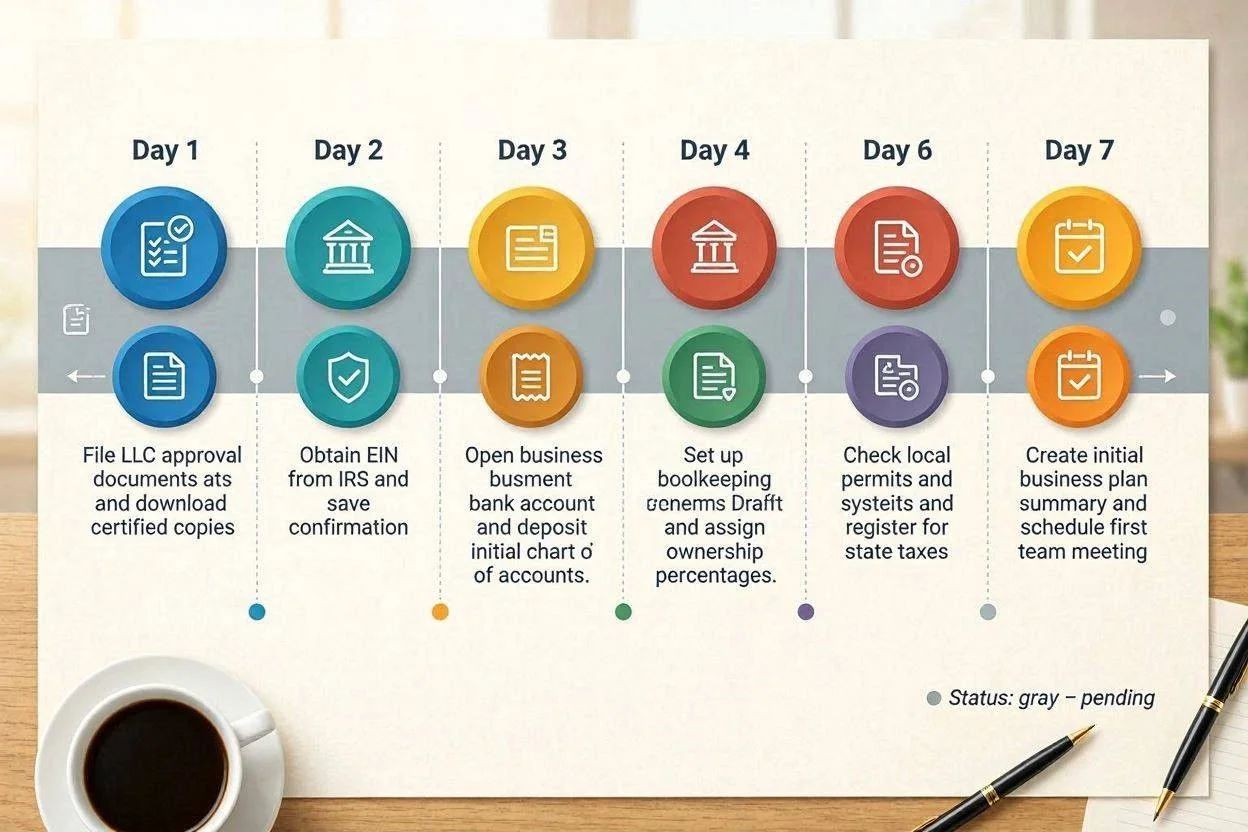
Days 1-2, secure the fundamentals
Get your Employer Identification Number (EIN). Head to the IRS site at irs.gov and apply right away. It's free and usually instant. You'll need it to open a bank account, file taxes, hire people, and build credit. Inc Authority can help with setup, but the EIN itself costs nothing from the IRS.
Review and finalize your operating agreement. Even if your state doesn't require one, you should draft or at least review a solid Operating Agreement. You'll want to cover ownership percentages, how management works, how profits and losses get split, decision making, dispute resolution, and what happens when someone leaves. The New York Department of State puts it this way: "While an operating agreement is not required to be filed, it is highly recommended for all LLCs."
Confirm Registered Agent and State Compliance. Make sure your registered agent is still active and your contact info is current. Then, look for any follow-up filings your formation state requires, like initial reports or franchise tax setup in places like California or Texas. Registered agent vs. business owner is a choice you've already made, but it's worth double-checking the specifics.
Days 3-4, financial infrastructure
Open a dedicated business bank account. Bring your EIN, Articles of Organization, and a photo ID to a bank, or just apply online. Shop around for low fees, solid mobile apps, and accounting software integrations. How to open a business bank account after forming a LLC digs into all of that.
Set Up Accounting and Bookkeeping. Pick software like QuickBooks Online, Xero, or Wave for basic use. Build a simple chart of accounts and decide between cash or accrual basis. Right away, separate personal and business expenses. Move your initial capital in and log it properly. If your operations are complex, think about hiring a bookkeeper or CPA for monthly help.
We get it, taxes are a lot. First, figure out your tax classification, like a disregarded entity, partnership, or S-Corp election. Then, mark down the big deadlines, quarterly estimated taxes, state taxes, and sales tax permits if those apply to you. LLC tax surprises for new owners shows you what to watch for in year one.
Days 5-6, operations, insurance & branding
You'll need to get the right licenses, permits, and insurance. Check your state's business portal or SBA.gov to see what's required at the local, state, and federal levels. General Liability Insurance is typically the baseline. If you're hiring staff, think about Professional Liability or Workers' Comp. Why a LLC won't protect you from lawsuits explains why insurance matters just as much as your LLC.
Establish Your Business Presence. Grab a domain name and get professional email through Google Workspace or Microsoft 365. Put together a simple site with your services, contact info, and legal pages. Order some business cards, make social profiles that look consistent, and set up your Google Business Profile.
Internal Systems. We set up project management tools like Notion, Asana, or Trello, file storage like Google Drive or Dropbox, and communication tools. We also create templates for invoices, contracts, and client onboarding.
Day 7, review, plan, and celebrate
Let's run through a compliance checklist review. Formation docs, EIN, bank account, Operating Agreement, insurance quotes, and licenses. Get it all documented in a secure "Business Bible" folder, both physical and digital.
Draft your 30/60/90 day plan. Set clear goals like revenue targets, customer acquisition, and product or service launch. Figure out your first hires or contractors if you're looking for them. Your first 30 days after forming a LLC builds on what you set up this week.
Celebrate, sure. Acknowledge the win, but think of this as the starting line, not the finish.
Key pitfalls to avoid
Multi-Member vs. Single-Member. Multi-member LLCs come with extra tax and agreement headaches. Tackle those early on.
Foreign Qualification. If you'll operate in multiple states, you'll need to check each state's requirements.
Money Management. Never commingle funds. That’s the fastest way to pierce the corporate veil and lose your liability protection.
Overwhelm. You don’t have to nail everything in week one. Sort out legal and tax stuff before you worry about marketing.
Professional Help. Set aside money for an attorney and a CPA consult within the first 30 days. That upfront cost usually pays for itself, and then some.
State-Specific Nuances. Requirements vary a lot. California hits you with a $800 annual franchise tax, and New York makes you publish. So check your state's rules.
Frequently asked questions
Focus on getting your EIN, opening a business bank account, finalizing your Operating Agreement, and setting up basic insurance. These are the legal and financial foundations that protect your business.
Yes, you should get your EIN on day one. It’s free from the IRS and you’ll need it to open a bank account, hire people, and file taxes. You can grab it in about 15 minutes on IRS.gov.
Technically yes, but it’s risky. a LLC limits your liability, but it doesn’t replace insurance. If something goes wrong in your first week, you could be personally exposed. Get at least general liability coverage before taking on clients.