What an articles of organization actually looks like
Most state forms are uglier than they need to be. And every year, the same three fields trip up first time filers. Here's the document itself, a completed sample, and how the form differs across the states where most LLCs get formed.
What's in this guide
Every state requires an Articles of Organization to create a LLC. In Texas and Delaware it's called a Certificate of Formation. In a handful of others it's a Certificate of Organization. Same short form, three different names, and no state makes it obvious that you're looking at the right thing.
The form itself is one to three pages. What makes it worth reading about before you file is that small mistakes, a PO box used as a registered agent address, a LLC name that fails the state's uniqueness test, send the whole thing back. In some states you pay the filing fee again. This guide walks through what the document looks like, what a completed sample reads like, and which fields trip people up.
What the document actually is
An Articles of Organization is a short form you file with your state's Secretary of State (or whatever your state calls it, some use a Division of Corporations). It's what creates the LLC. Your LLC doesn't legally exist until the state approves it. You can't open a business bank account with it, sign contracts under it, or apply for an EIN with it.
People mix it up with an operating agreement all the time. But that's a totally different document. The Articles of Organization go to the state. The operating agreement stays in house. It spells out how the LLC runs between members. In most states, a single member LLC doesn't even need one. It just helps if a bank or a lawyer asks to see it. Want the full rundown on what's required and what's not? We break down the paperwork checklist before filing a LLC in another guide.
The Articles of Organization aren't a business license either. They don't let you operate in any specific industry. They just create the legal entity. Business licenses, permits, and any professional registration come later. That's part of why the first 30 days after forming your LLC involve more paperwork than the filing itself.
What an articles of organization sample looks like
Here's a filled-in Articles of Organization sample for the 2026 filing season. It's ready to submit. This is what a completed example looks like before it goes to the state. Every field is filled in. The organizer signed it. The effective date is noted at the bottom. Want to compare it against the blank version? The template section below covers that.
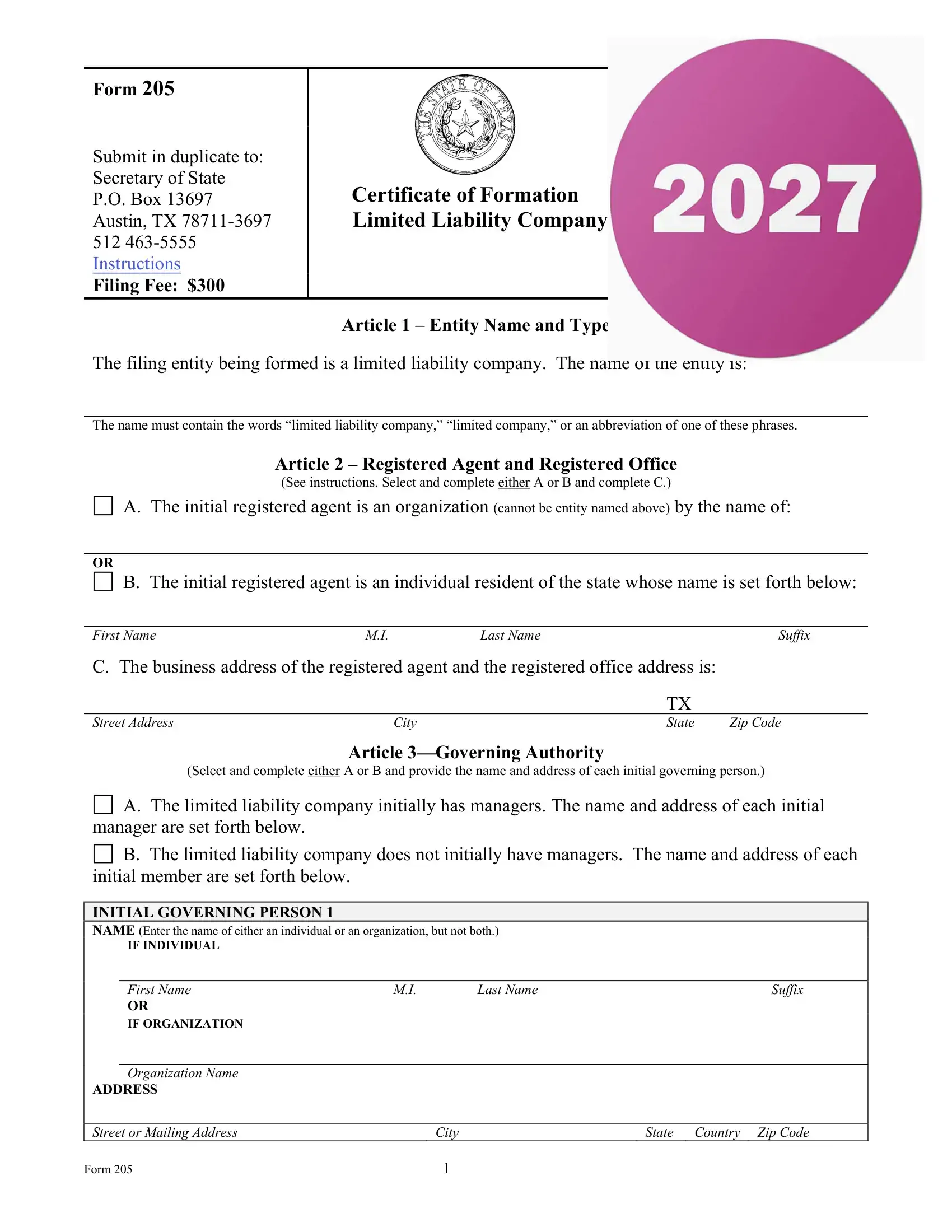 2027 Edition
The stamped or certified copy that comes back from the state, usually by mail, sometimes by email, is the one you'll actually use. That's what your bank wants to see. That's what a lawyer asks for during due diligence. And that's the document proving your LLC exists. The pre-filing version above is just the input. The approved version is the artifact worth keeping in a folder you'll remember.
Why the free templates cause most of the delays
Every state puts its own fillable PDF on the Secretary of State website. That one's free. It's what the state expects. Use anything else and you're asking for trouble. Generic Articles of Organization templates, the kind you find on blog posts and template sites, get rejected. Why? State forms have fields that match that state's statutes. The clerk isn't going to guess what you meant.
If you want a blank one to preview the structure before committing, our free Articles of Organization template mirrors a typical state layout. Same fields the state will ask for. Same order. For a filled in version, scroll up to the example above. But when you actually file, go to your state's website and download their form. That step is worth the five extra minutes.
The other reason templates cause delays is that people don't take naming rules seriously. Most states run an automated name check when you file. If your proposed LLC name looks too close to an existing entity, even one in a different industry, the state rejects your filing and you start over. If you're at this stage, it's worth reading the guide on choosing a LLC name without trademark issues, because the naming problem doesn't stop at state filing. It comes up later too, when you try to build a brand.
The three fields people get wrong
The form asks for a lot, but three fields cause most of the amendments we see:
Registered agent address. It has to be a real street address in the state where you file. PO boxes get rejected. If you use a registered agent service, they give you their address for this. If you're your own agent, use your home or your office. Both work in most states. Wondering if a service is worth it? The registered agent vs business owner comparison breaks down the tradeoffs by state.
Management structure. Member managed or manager managed. Most single member LLCs are member managed, and most people filing their first LLC don't even know there's a difference. Pick the wrong one and your filing still goes through, but it changes how the LLC gets treated later. Taxes. Liability. Who can sign contracts for the company. If you're filing with partners, think this one through before you file, not after.
Organizer signature. The organizer is just whoever files the form. Doesn't have to be an owner. If a formation service is handling it, their name goes here, not yours. People get confused by this. They think signing the Articles of Organization makes them a member of the LLC. It doesn't.
How the form differs by state
The form isn't the same everywhere. The name is different, the agency you file with is different, the fee is different, and a few states tack on requirements you won't see anywhere else. Here's how the six states where most new LLCs get formed stack up, with a sample image for each so you can see what the real form looks like.
| State | Form name | Filed with | Filing fee |
|---|---|---|---|
| Texas | Certificate of Formation | Secretary of State | $300 |
| California | Articles of Organization | Secretary of State | $70 (+ $800 annual) |
| New York | Articles of Organization | Department of State | $200 (+ newspaper) |
| Delaware | Certificate of Formation | Division of Corporations | $110 |
| Florida | Articles of Organization | Division of Corporations | $125 |
| Wyoming | Articles of Organization | Secretary of State | $100 |
Texas, certificate of formation
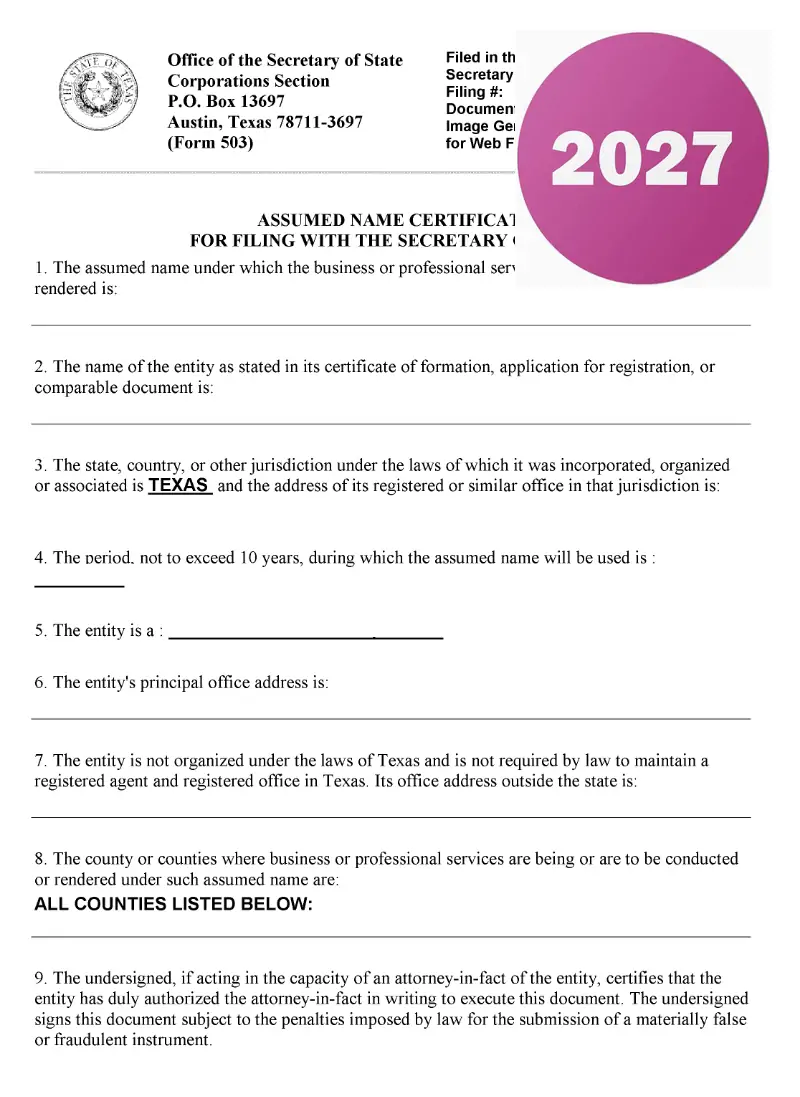
Texas doesn't use the term "Articles of Organization" at all. It's called a Certificate of Formation, filed with the Secretary of State. The fee is $300, one of the highest in the country, and the form is a single page. Here's a sample of what a Texas Certificate of Formation looks like with the fields filled in:
California, articles of organization
California uses the standard Articles of Organization name and files it with the Secretary of State. The filing fee is only $70. That's cheap compared to Texas. But the $800 minimum annual franchise tax kicks in the first year and every year after. Here's a sample of what the form looks like when it's filled out:
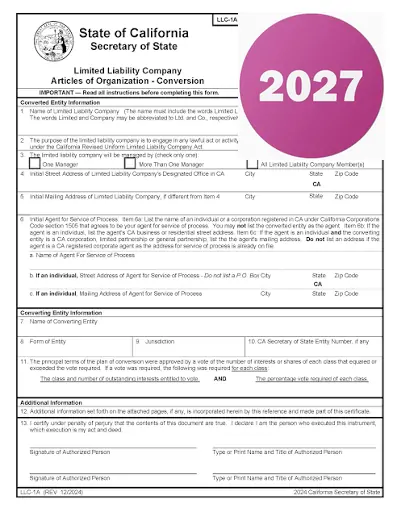
That's the finished example. At first glance it looks like most other states' forms. What sets California apart is what comes next. The $800 tax. And in some counties, a business license requirement that works on its own, separate from the LLC filing. The California LLC template on the Secretary of State site never mentions the franchise tax. The California LLC guide covers the whole thing.
New york, articles of organization
New York's Articles of Organization get filed with the Department of State. The form is pretty simple. But New York throws in a step that almost no other state has. Within 120 days of filing, you have to publish a notice of formation in two newspapers in the county where the LLC is located. Here's a sample of what the form looks like filled in:
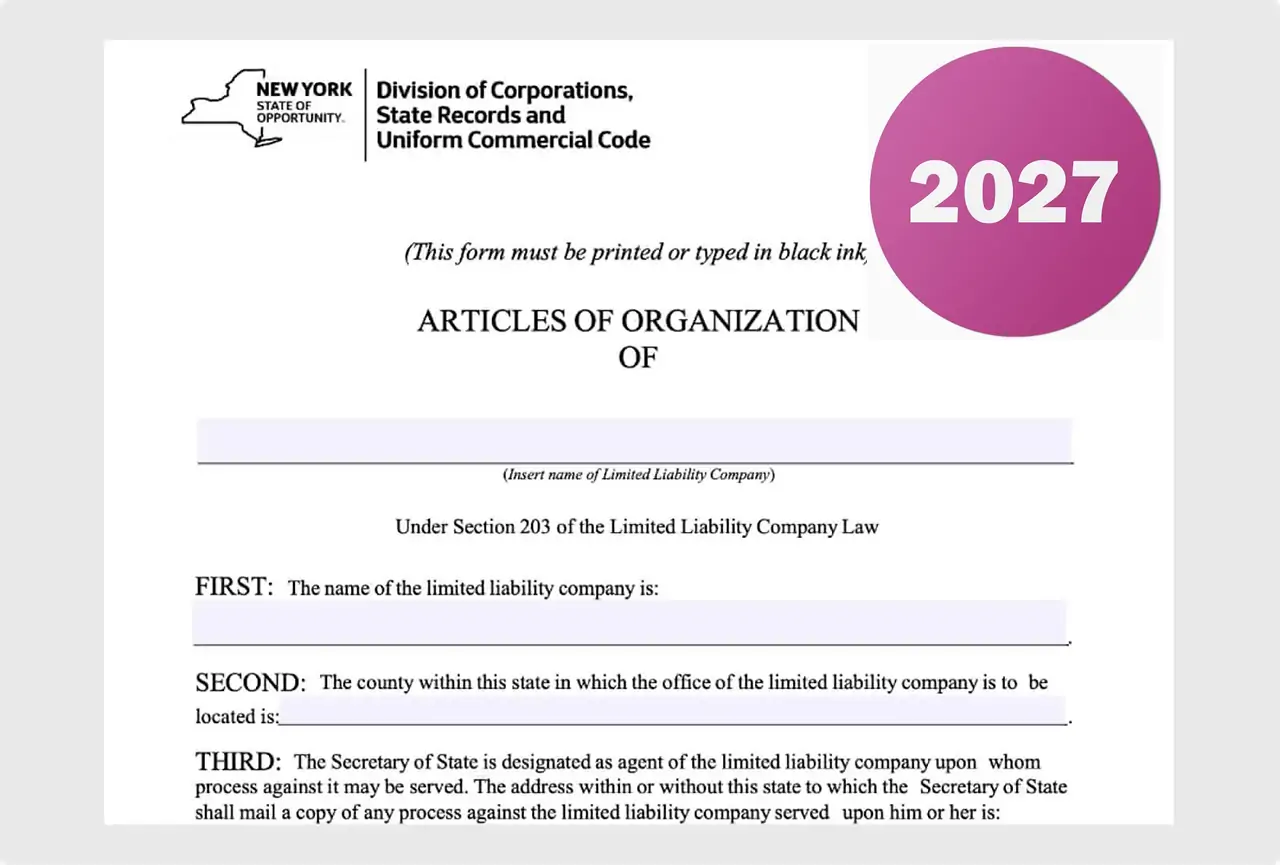
The example above is what you'd turn in. What the form won't tell you about is the newspaper rule, the Certificate of Publication you have to file after, or the $200 to $1,500 cost of that publication, which depends on your county. The template on the Department of State website doesn't mention it either. That info is buried on a separate instructions page. The New York LLC guide covers all of it.
Delaware, certificate of formation
Delaware calls it a Certificate of Formation and files it with the Division of Corporations. The fee is $110. That's lower than Texas, similar to Wyoming. Delaware is popular with founders planning to raise venture capital. But for a simple single member LLC with no investors, there's no real advantage to forming there over your home state. Here's a sample of what the form looks like:
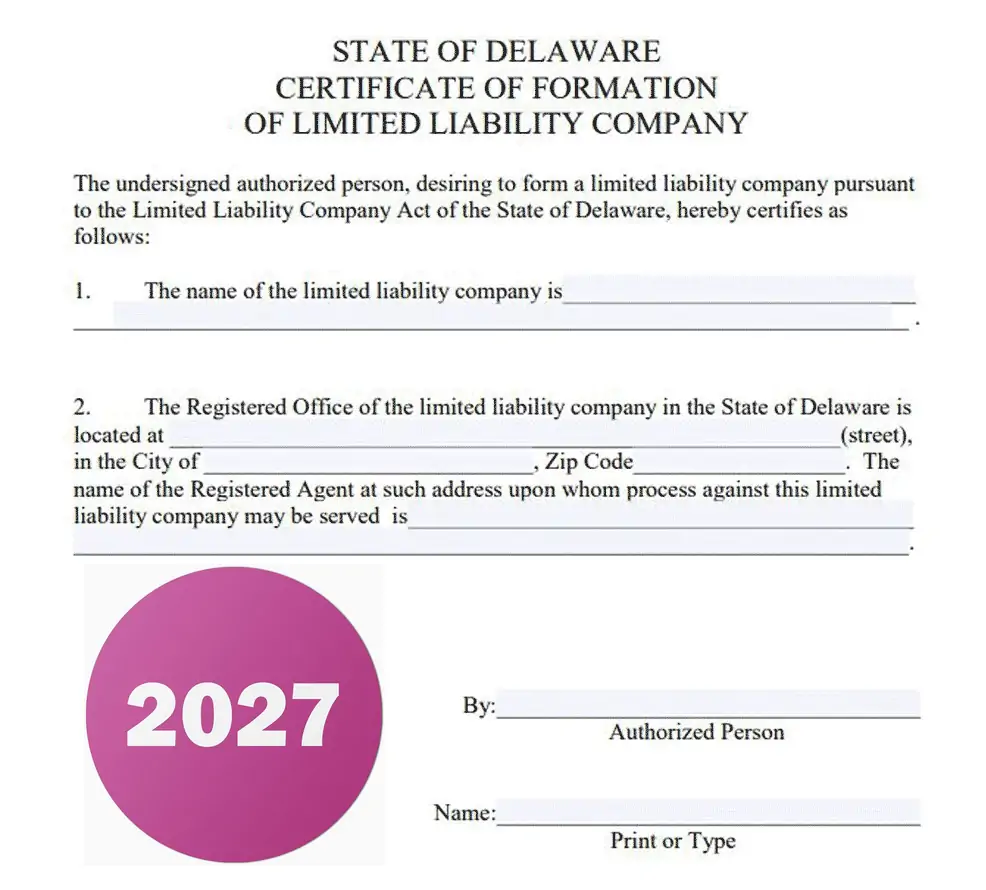
The example above is done. Delaware's filing portal is one of the faster ones, and the state usually processes submissions in 1 to 2 business days. You can find the blank template, also called a Certificate of Formation, on the Division of Corporations site. If you want to know why you'd form in Delaware instead of just registering there as a foreign entity later, we cover that in the Delaware LLC guide.
Filing it, and what you'll actually pay
There are three routes: file yourself online through the state's portal, use a free formation service that files on your behalf, or hire a lawyer. The cost difference is smaller than the marketing suggests.
| Method | What you pay | Realistic timeline |
|---|---|---|
| File yourself online | State fee only ($35–$500) | 1–3 weeks for standard processing |
| Free formation service | State fee + $0 service fee | 1–2 weeks, varies by state |
| Paid full-service | State fee + $99–$500 | 1–2 weeks, faster internal review |
The state fee is the same no matter which route you take. Texas charges $300. California charges $70 to file but adds a $800 annual franchise tax. Wyoming is $100. Delaware is $110. The national average sits around $130, but "average" hides a lot, the range from cheapest to most expensive state is over $400.
What you're paying a formation service for is the pre-filing review. They check the name. They format the registered agent details the right way. They catch the fields most people get wrong. And they handle resubmission if the state kicks it back. If you're filing a simple single member LLC in your home state, doing it yourself is genuinely fine. If you're filing a multi member LLC or registering in a state where you don't live, the review is worth something.
Most people end up using a service anyway. Even the ones who swear they'll do it themselves. Why? The checkout flow is where the upsells live. At Inc Authority, the formation itself is $0. But the registered agent renews at $179 to $249 in year two. ZenBusiness charges for registered agent from day one. Bizee's renewal is lower, around $119. If you go the service route, the list of LLC upsells worth paying for is short. Most aren't.
Here's something that catches people off guard: those free formation services aren't really free the way you'd think. They make their money on registered agent renewals, EIN filings, and compliance packages. That's not a scam, but it does shape how the checkout flow works. If you're wondering whether Inc Authority is really free, here's the truth. The filing is. Everything after that? Not so much.
The Articles of Organization is a short form. But three fields cause most rejections: registered agent address, management structure, and the organizer signature. The form name and filing agency differ by state. A few states, New York especially, add requirements that make the total cost hard to predict. Fill it out on your state's own form, not a generic template. And pay attention to the naming rules.
Note : Password to unprotect the pdf files on this page is : comparellcs
Questions we get asked a lot
In most states, yes. Only a handful require an operating agreement, and California and New York are two of them. Even there, the state doesn't ask for it when you file. What an operating agreement does is settle disputes later. If you're filing a single member LLC and you never plan to take on a partner, you can skip it. But if there's any chance you'll bring someone in, write one before you need it.
The completed sample above is exactly that: a filled in form showing how every field reads with real information. Between that and the blank template, you have both versions. What you start from, and what you end up with. If you're filing with a service, they'll prepare the example for you and you'll only see the final version.
You get the form back with a rejection reason. Most states let you resubmit without paying the filing fee again. That works as long as you're fixing a formatting or naming issue, not changing material details. If the name is the problem, you'll usually need to pick a different one and refile. And in a few states, that means paying the fee twice. Formation services handle resubmission for you. That's one of the practical reasons people use them.
You file Articles of Organization in one state, usually where you live or where the business is physically based. If you then operate in another state, you register as a foreign LLC there, which is a separate filing with a separate fee. The rule of thumb is that you register in a state once you have a physical presence there, not just customers. This trips up a lot of e-commerce founders who assume a Delaware LLC covers them nationwide.
It comes from a law passed in the 1800s. The idea was to let the public know when a new limited liability entity forms in a county. Most states got rid of rules like this decades ago. New York kept theirs. Within 120 days of forming, you have to publish in two newspapers your county clerk picks. One daily and one weekly. Then you file a Certificate of Publication with the Department of State. Total cost runs from $200 to $1,500 depending on the county.