Pennsylvania llc, $7 annual reports, veteran fee waivers, and rpllcs
Contents
- Veteran Formation Fee Waiver
- Restricted Professional LLCs (RPLLC) as a Niche Shield
- The $7 Annual Report Transition
- Commercial Registered Office Provider (CROP) + Privacy Layering
- Default Rules in the Operating Agreement
- Local Tax Navigation + Philadelphia/Pittsburgh Edges
- Fictitious Names (DBAs) for Brand Portfolios
- Frequently Asked Questions
Pennsylvania LLCs give you a surprisingly strong combo: low ongoing costs, a flat 3.07% personal income tax rate (one of the lowest in the country), and a recent move to a super cheap $7 annual report. That makes PA a seriously underrated "Keystone" pick for 2026. We’ve got some fresh angles here that most formation guides skip.
If you’re a veteran, a licensed pro, or a bootstrapped founder who wants a low maintenance home base, PA has some tricks up its sleeve. For a bigger picture on how the state stacks up, our Texas vs California LLC comparison shows a solid contrast in how they handle taxes and compliance.
1. Veteran formation fee waiver (the best-kept secret)
Pennsylvania covers the full $125 Certificate of Organization fee for veterans and reservists. No discount, just a complete waiver. It’s one of the strongest veteran business perks in the country, but you won’t see it mentioned much in general guides.
Creative play: pair it with a double LLC setup, like an anonymous out of state holding company owning the PA entity, for veterans who want both savings and privacy. That turns PA into a domestic hub you can get into for almost nothing.
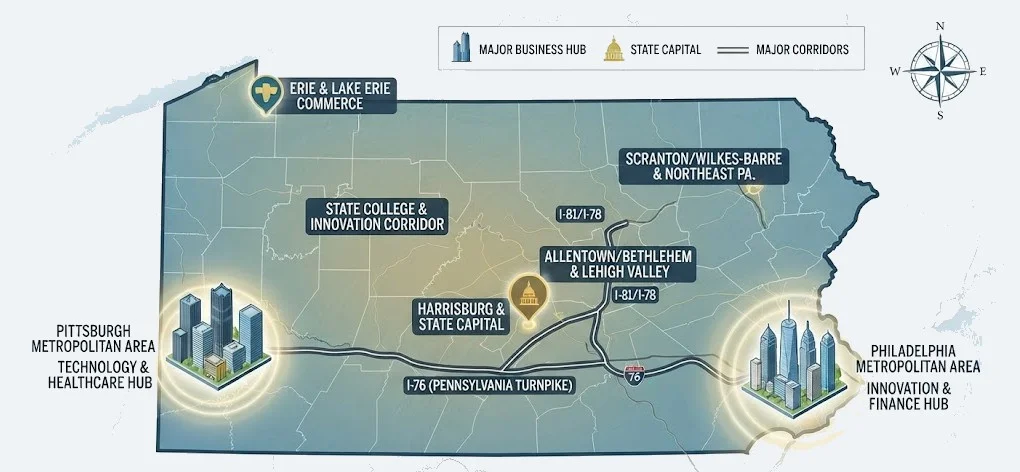
If you're a veteran, this is a no-brainer. Even if you're not, the $125 filing fee is still among the more affordable in the Northeast. For those looking to form a LLC with minimal upfront cost, our best free LLC service article might offer some additional angles, though PA's veteran waiver is truly unique.
2. Restricted professional llcs (rpllc) as a niche shield
For licensed pros like doctors, lawyers, accountants, or vets, Pennsylvania makes you use a Restricted Professional LLC. That’s not a choice, and it comes with its own set of rules. But it gives you a liability and governance setup that actually fits how professional services work.
Underrated angle: use a RPLLC for hybrid practices, like medical plus wellness, or multi state telehealth setups. The structure signals regulatory compliance but still lets you manage things flexibly on the inside. Not many people talk about layering that with a strong operating agreement waterfall to keep your personal licenses safe when disputes pop up.
For founders in regulated industries, getting these nuances right is important. Our why a LLC won't protect you from lawsuits article digs into where liability protection falls short, and that matters a lot for professionals.
3. The $7 annual report transition as a compliance "reset"
PA used to put out a report every ten years. Now it’s a $7 yearly thing, due between Jan 1 and Sept 30, thanks to Act 122. You’ve got a grace period through 2026, so missing the early ones won’t put you at risk of dissolution. But come 2027, they’re enforcing it fully.
Creative strategy: think of this as a built in compliance onboarding year. Use 2025 through 2026 to set up automated reminders, connect with your accounting software, and bundle it with fictitious name registrations, which run $70 each and don't require publication for LLCs. That gives you a lightweight multi brand setup under one entity.
This $7 fee ranks among the cheapest in the nation. Want a bigger picture of what states charge for compliance? Our annual costs of owning a LLC guide shows how PA's new fee stacks up.
4. Commercial registered office provider (crop) + privacy layering
PA needs a registered office, which means a physical street address in the state. Most folks go with a Commercial Registered Office Provider, or CROP. Pair that with a Wyoming or New Mexico anonymous holding LLC as the organizer or member, and you’re basically invisible.
Advanced idea: this “nested privacy” setup keeps your name out of the main PA filing, but you still get PA’s low taxes and easy upkeep. It’s great for consultants, investors, or e commerce folks who want that domestic credibility without putting everything out there.
For those into this kind of privacy setup, our Nevada vs Wyoming LLC comparison digs into how those states handle privacy as the holding layer.
5. Default rules in the operating agreement (the equal-per-capita trap)
PA’s Uniform LLC Act defaults to per capita distributions, so everyone gets an equal share no matter how much they own or put in, if the operating agreement doesn’t say otherwise. That catches a lot of multi member or investor backed setups off guard.
Creative customization: you can build "smart" operating agreements with dynamic waterfalls that tie to performance metrics, milestones, or even AI assisted tracking. Add provisions for different classes of membership so you're ready for future funding rounds. That flips a potential pitfall into a governance superpower.
If you're setting up a multi-member LLC, you really need to get this right from day one. Our do you need an operating agreement article gives you a solid base to build your internal rules on.
6. Local tax navigation + philadelphia/pittsburgh edges
While the state rate is a flat 3.07%, municipalities tack on their own layers, like Philadelphia’s BIRT and wage taxes. If you’re a non-resident or running things remotely, you can trim that exposure.
Niche plays: Use PA as a manufacturing or distribution base, since you get solid logistics near big East Coast markets, but keep sales and marketing elsewhere. If your business is mission driven, look into the Public Benefit LLC designation when you form, it lets you bake in purpose language without piling on extra compliance.
For founders weighing PA against other choices, our home state vs Delaware LLC comparison could help you figure out if PA’s local tax setup works for you.
7. Fictitious names (dbas) for brand portfolios
LLCs can register multiple fictitious names cheaply ($70 each) without newspaper publication. This lets you try clean branding experiments or geographic variations under one entity.
Forward-thinking combo: pair series style internal divisions (through detailed OA) with DBAs for product lines, not true series LLCs (PA doesn't really authorize them like some states do), but it works as a functional stand in for a lot of small to mid sized operations.
If you want help filing, Inc Authority has a free package (you just cover the state fee), and their registered agent add-on works well for keeping things private. ZenBusiness offers something similar, but their upsells can get messy. For an Analysis, our Inc Authority review covers what you get.
Pennsylvania suits businesses with real ties to the state, like logistics, professional services, manufacturing, or Northeast operations, that want low fuss and a solid tax rate. It’s not the flashiest pick, since there’s no strong series LLC statute and privacy is modest, but the numbers work out great for bootstrapped or veteran founded ventures. The annual report change adds a small new rhythm, but at $7 it’s still one of the cheapest in the U.S.
Always tailor things to your industry, where you’re located, and how you plan to grow. And definitely talk to a pro about tax stuff or your operating agreement. For the latest forms, check the PA Department of State portal. If you want a bigger picture of starting a LLC, our first 30 days after forming a LLC guide is pretty handy.
Frequently asked questions
Yes. Pennsylvania waives that $125 Certificate of Organization filing fee for veterans and reservists. It’s one of the strongest veteran business perks out there.
The annual report fee is $7, due between January 1 and September 30 each year. That’s one of the lowest fees in the country.
a RPLLC is a special designation for licensed pros like doctors, lawyers, and accountants. It comes with its own governance rules, and Pennsylvania requires it for certain professional services.
No. Unlike New York, Pennsylvania doesn’t make you publish a notice of your LLC formation in a newspaper.
If your operating agreement is silent, PA’s default rule is per capita distributions. That means everyone gets an equal share, no matter how much they own or put in.