The diy illusion, what nobody tells you about starting a LLC yourself
Contents
The internet loves telling you to skip the pros. "Why pay a lawyer? Just file the LLC yourself, it takes 15 minutes and costs the state fee." And sure, that works for some people. But not for everyone. Not even close. There's a reason those services exist, and it's not just to take your cash. A lot of folks don't realize what they're signing or missing until it's too late. So before you dive in solo, maybe think about what you actually need. Sometimes the cheap route ends up costing way more.
It sounds empowering. And technically, it’s true. Filling out Articles of Organization on a Secretary of State website is mechanical enough that anyone with a credit card can do it.
But telling a new founder they can easily start a LLC themselves without warning them about the DIY Tax? That’s like saying you can rewire your house because wire cutters are cheap.
If you go the totally solo route, here’s the raw, creative truth nobody warns you about. For a bigger picture on whether pro help actually pays off, our are LLC services worth paying for article breaks down the full cost benefit.
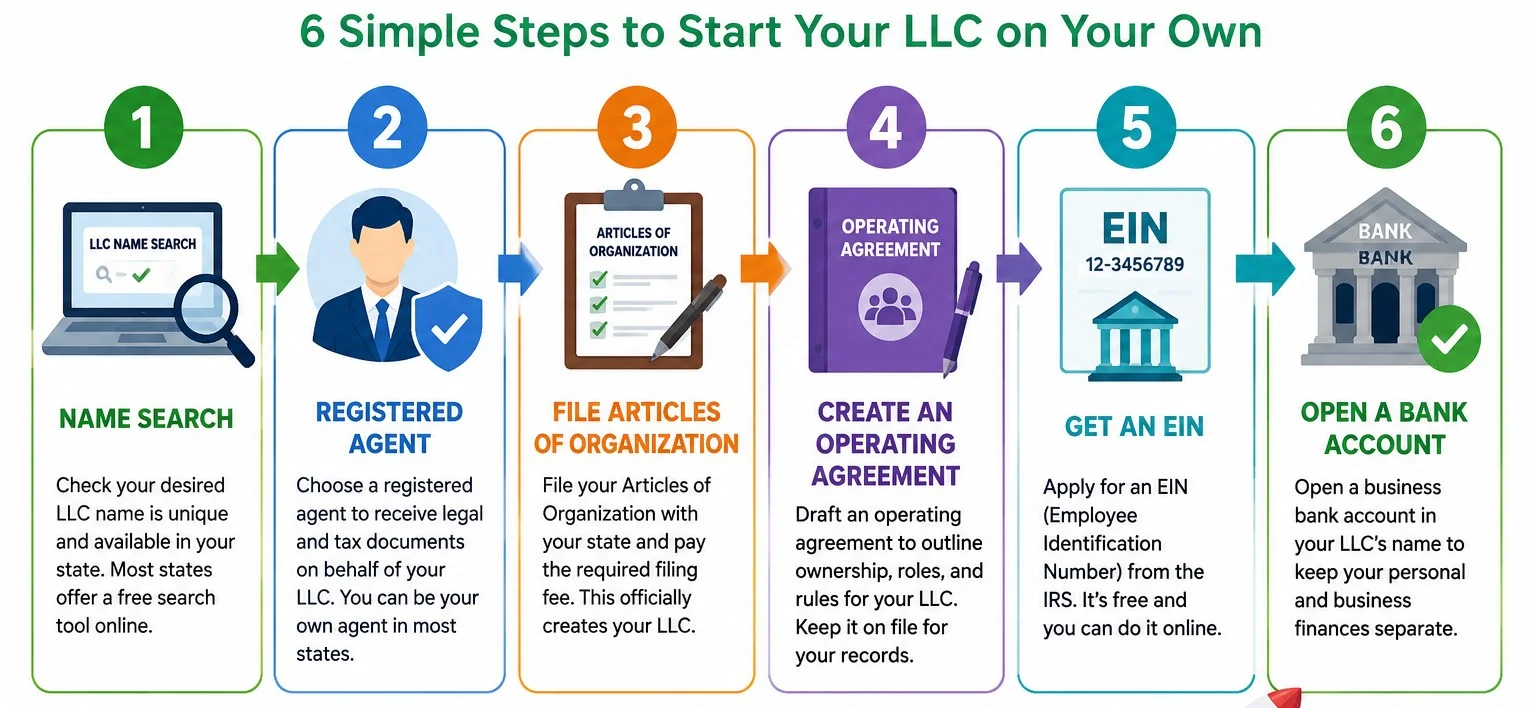
1. The "invisible compliance trap" (the state doesn't send you manuals)
When you use a pro service or a legal platform, they act as a buffer between you and the process. They track deadlines, flag state shifts, and set up your initial data structure.
When you do it all solo, you're your own corporate secretary.
The Zero-Warning Reality: State portals won't text you reminders when your initial list or foreign qualification windows creep up. Miss an unique state-specific post-formation filing, like an initial list due 30 days after creation, and the state drops your status on the spot.
The Knowledge Asymmetry: You don't know what you don't know. For instance, many DIYers assume that once the state accepts their $100 filing fee, they are fully operational. They miss federal mandates like the FinCEN BOI (Beneficial Ownership Information) report, completely unaware that failing to file it independently can trigger steep federal penalties.
2. The free template illusion (the operating agreement risk)
The most dangerous part of the DIY approach is searching Google for a "free LLC operating agreement PDF."
The Cookie-Cutter Hazard: Free templates try to cover every business on earth, so they end up protecting no one in particular. Their generic boilerplate often clashes with your state's default rules.
The Piercing-the-Veil Risk: If you're a single-member LLC, courts and IRS auditors often scrutinize a generic template. When your operating agreement looks like it was pulled off some random forum back in 2011 and never touched since, it doesn't prove your LLC is a real, separate legal entity. A shaky DIY agreement is the easiest tool for a plaintiff's lawyer to grab when they try to pierce your corporate veil.
This is why we wrote our do you really need an operating agreement article, to help founders see what’s on the line.
3. The privacy sacrifice, trading data for dollars
When founders go the DIY route, they almost always act as their own Registered Agent to save that $100 to $150 yearly fee.
What those "Save Money and Do It Yourself!" guides don’t tell you is the privacy trade off.
- Your home address (or personal phone number) gets listed as your business’s permanent, public address on the Secretary of State’s site, and anyone can look it up.
- Within 48 hours of filing yourself, your public registry data gets scraped by aggressive commercial vendors, digital marketing bots, and insurance sales callers who target new business filings. Reclaiming your privacy after that data goes public means paying a registered agent later anyway, and you’ll often deal with residual spam that sticks around for years.
For strategies to protect your privacy, our how to use a virtual address for LLC privacy article has some practical fixes.
4. The banking bottleneck, the unspoken friction
You file your LLC yourself, get your stamped document, and march proudly down to your bank (or log into an online business bank portal) to open an account. This is where many DIYers hit a brick wall.
Bank compliance departments are notoriously strict. If your Articles of Organization, your EIN letter name spelling, your internal resolutions, and your ID don't match character-for-character, automated bank compliance systems will freeze your application.
When a formation service handles your setup, their documentation packets are usually pre-vetted and formatted to pass bank algorithms smoothly. When you do it alone, a minor typo in your member-managed structure selection can force you to file an official (and costly) amendment with the state just to open a checking account.
For a deeper look at what happens after formation, our first 30 days after forming a LLC guide covers the banking setup and other important steps.
The verdict, should you diy your llc?
Diy it entirely if,
- You treat business formation like an admin research project, are obsessively organized, read state statutes line by line, and keep a strict external calendar for compliance rules.
- You are running a solo, ultra-low-risk hobby that turned into a business, where absolute minimalism is your main measure of success.
Consider professional support if,
- Your time is worth more than the $100 to $300 you’d pay a reputable formation service or attorney.
- You have co-founders, partners, or outside capital, so a generic DIY operating agreement could really mess up your internal governance later on.
If you decide to go with a service, our best LLC service for beginners guide can help you choose the right one. Inc Authority gives you a genuinely free filing package, so you only pay the state fee, which makes it a hit with founders watching their budget. ZenBusiness has a slicker dashboard, but it comes with more upsells. Both are solid, honestly it just depends on whether you like the interface and the support you get.
The DIY route can work, but it’s usually not the smart play if you value your time or want to do more than tinker. The hidden costs, like compliance headaches, privacy leaks, and banking hassles, almost always outweigh the $100–$300 you’d drop on a pro service. Don’t let that “free” sticker trick you.
Frequently asked questions
Technically yes, you can file the paperwork yourself and only pay the state filing fee. But "free" skips over the hidden costs, the time, the risk, the privacy loss, and the chance you'll make a pricey mistake.
The biggest mistake? Grabbing a generic operating agreement template that doesn't fit your situation. That's the fastest way to pierce your corporate veil and kiss liability protection goodbye.
Not necessarily. A reputable formation service can handle the filing correctly. But if you’ve got complex ownership structures, high risk assets, or multiple partners, a lawyer’s worth the investment.
The Beneficial Ownership Information (BOI) report is a federal filing you have to do under the Corporate Transparency Act. Nearly every new LLC needs to file it within 90 days of forming. It's a big DIY blind spot, and it can cost you.