The convenience tax, are LLC formation services actually worth it?
Contents
When you decide to start a business, the internet hits you with slick ads for online LLC services. They sell you on a smooth, easy road to entrepreneurship, acting like they’re the only link between your rough idea and a real company.
Most reviews break down the comparison matrix: Company A has a cheaper basic tier; Company B has a larger legal document library. Winner: ZenBusiness for budget and speed. Winner: LegalZoom for name recognition and attorney access.
But that misses the deeper, uncomfortable truth. To see if LLC services are worth your hard-earned money, we have to look past the marketing dashboards and dig into the psychological and structural trade-offs nobody mentions. For what the real checkouts look like, our checkout experience study breaks down the upsell pressure across every major platform.
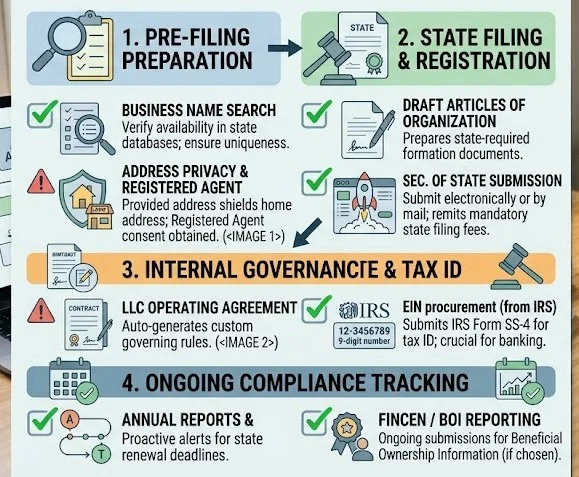
The illusion of complexity, what they charge you to do
To understand whether these services are worth it, you first have to realize what they’re actually selling.
The State Filing Form: It’s basically a digital data entry form, the Articles of Organization, where you drop in your company name, address, and organizer info.
The Government Portal Reality: Every Secretary of State website has a public online portal. Actually filling out the form? That takes about 15 minutes.
When you pay a LLC service a base fee (or opt into their bundled packages), you’re not buying exclusive legal access. You’re paying a convenience tax so you don’t have to read government instructions.
If you value your time at $30 a hour and find bureaucratic websites deeply intimidating, paying $50 to $150 for someone else to click "submit" might feel like a bargain. But if you're bootstrapping on a razor-thin budget, paying a middleman to do a direct data entry task is an unnecessary overhead expense. Our can you file a LLC yourself article covers the DIY route in detail.
Where they are actually worth it, the invisible guardrails
While the base filing is a commodity, reputable services pull their weight in areas that are difficult to replicate on your own:
1. The registered agent shield (privacy & process)
Every state requires a LLC to have a registered agent. That’s a physical point of contact, available during normal business hours, to accept legal mail (service of process).
Why it's worth paying for: If you act as your own registered agent, your home address goes onto the public state registry, inviting spam, data scrapers, and process servers directly to your front door. Paying a commercial registered agent service keeps your personal residence off the internet. That layer of privacy is often worth every penny.
This is where Northwest Registered Agent really shines; their whole operation is built on privacy and compliance, though they cost more than some others. Inc Authority also throws in a registered agent add-on, and their free filing package makes them a go-to for folks just starting out. Our Inc Authority vs Northwest Registered Agent comparison lays out the trade-offs.
2. The compliance architecture
Many platforms offer automated tracking dashboards or "worry free compliance" add ons that watch your state annual report deadlines.
Why it's worth paying for: If you're juggling multiple projects or tend to miss admin details, skipping an annual report can trigger administrative dissolution, which instantly kills your liability shield. A solid compliance dashboard works like an external brain, so you don't have to worry about a costly slip up.
For a deeper look at what happens when compliance fails, our how to avoid administrative dissolution article is key reading.
Where they are a waste of money, the software bloat
On the flip side, a lot of features formation services push give a new founder zero real ROI.
The "Custom Operating Agreement" Upsell: An operating agreement matters, sure. But a lot of those automated templates in mid-tier packages? They’re just generic boilerplate. If you’ve got a multi-member LLC, that cookie cutter won’t hold up when internal disputes hit. You need a real attorney to draft something custom, not a software checkbox.
The Bundled Digital Ecosystems: Upselling web hosting, domain registration, and custom corporate binders often locks you into closed ecosystems with inflated recurring costs. You can secure these tools independently with better control and lower pricing.
For a full rundown on what to skip, our don't pay for these LLC upsells piece hits the usual traps.
The verdict, are LLC services worth it?
They are not worth it if,
- You are comfortable navigating state government websites, have a secure address (or virtual office) to use for public filings, and possess the discipline to track your own compliance deadlines manually. In this case, DIY is free (minus state fees).
They are worth it if,
- You view your time as your most valuable asset, want to keep your home address off public data scrapers with a professional registered agent, and want one central digital dashboard to stay out of administrative trouble.
If you decide to go with a service, our best LLC service for beginners guide can help you choose the right one. Inc Authority gives you a genuinely free filing package (you only pay the state fee), so it’s a hit with founders watching their budget. ZenBusiness has a slicker dashboard, but it throws more upsells your way. Both work fine, so it really just depends on which interface and support style you like.
a LLC service isn’t a legal shield, it’s just an administrative convenience. Buy the baseline utility for the privacy and peace of mind it gives you, but cut the fluff at checkout without mercy. The real value sits in the registered agent and compliance tracking, not the filing itself.
Frequently asked questions
No. You can file a LLC yourself, straight with the state. Those services are just for convenience, not because you need them. So the real question is, is that convenience worth what you’ll pay?
The registered agent service and compliance tracking are the real standouts here. They keep your home address out of public records, and honestly, they save you from those pricey missed deadlines.
You’ll pay the state filing fee, plus a fair service fee if you use a platform. Skip the upsells you don’t need, like EIN services, binders, or rush processing.
Inc Authority’s free filing package is actually free, you just cover the state fee. They earn their keep through registered agent services and upsells. It works well, as long as you can ignore the extras.