Home state vs. delaware llc, the real trade-off
Contents
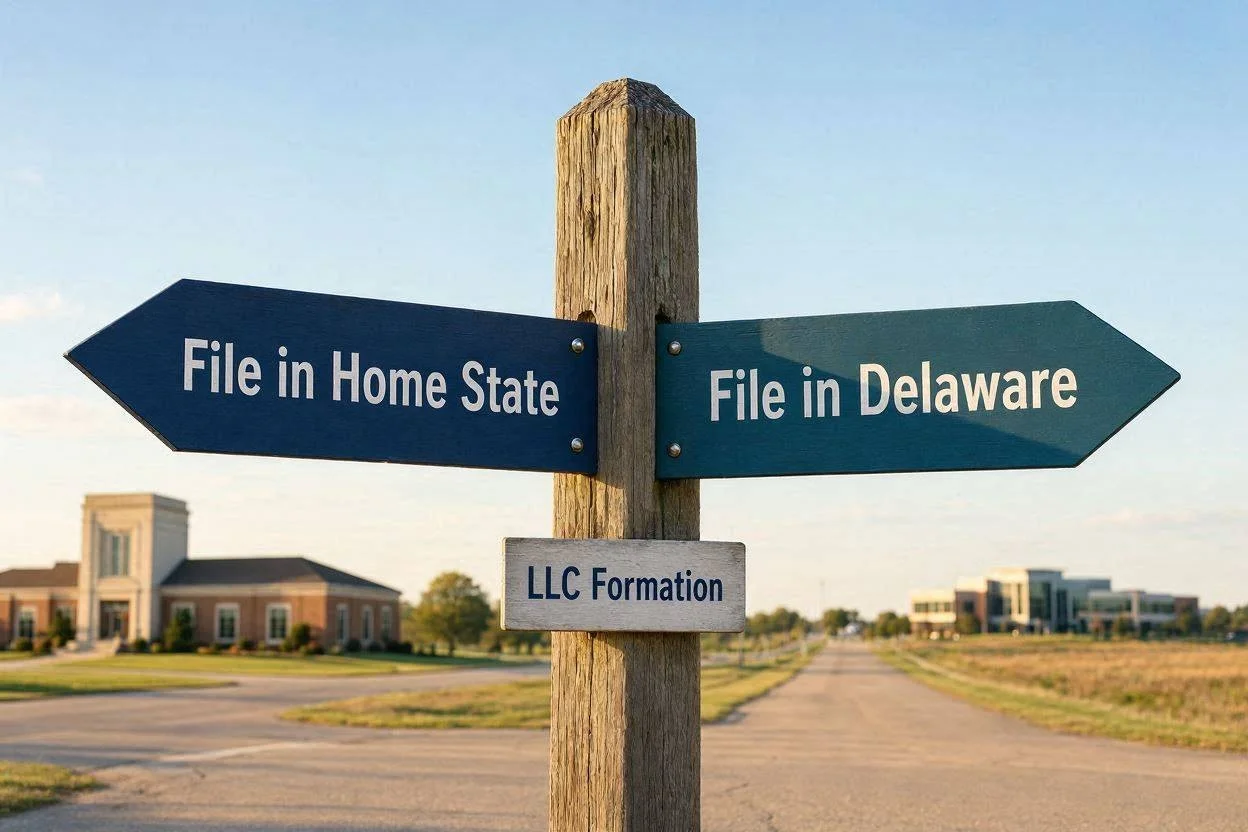
When you’re starting an online business or a freelance gig, you’ll hit a big fork in the road pretty fast: register in your home state or go with Delaware? Delaware vs. Wyoming LLC is a whole other argument, but the home state versus Delaware thing? That’s the one most first-timers face.
The Delaware Division of Corporations says: "Delaware is the top pick for over a million business entities." Meanwhile, the U.S. Small Business Administration points out: "Most small businesses should set up shop in their home state to keep things simple."
The core philosophy
The right choice really depends on what each jurisdiction is built to do. Home state vs. Wyoming LLC is a similar call, but Delaware exists for a very particular reason.
Your Home State (Operational Simplicity). Forming a LLC where you actually live and work keeps things simple. You register once, stay compliant locally, and deal with just one set of state rules. For local service folks, consultants, and retail shops, that's the standard move.
Delaware (The Investor Standard). Delaware's edge comes from a century of corporate law and the Court of Chancery, a business court with no juries where judges rely on steady precedent for messy corporate fights. The Delaware Court of Chancery puts it this way: "The Court of Chancery has jurisdiction over corporate disputes and is recognized as the leading business court in the United States."
The foreign qualification trap
A lot of first-time founders think forming a Delaware LLC just lets you skip the laws, fees, and taxes of the state where you actually live. The hidden costs of LLC formation often include foreign qualification fees that catch folks off guard.
The Reality of "Doing Business." If you live in Florida, run your digital agency from a laptop in Texas, or operate a storefront in Ohio, your home state views your Delaware LLC as a Foreign Entity.
Paying Twice. To operate legally where you actually work, you have to register your Delaware LLC as a foreign entity back in your home state. That means paying formation fees in Delaware, paying a registered agent in Delaware, and then paying foreign qualification and annual report fees in your home state too. The California Secretary of State says: "A foreign LLC transacting business in California must register with the Secretary of State and pay the applicable filing fee."
The cost reality
Maintenance costs really steer how healthy an early-stage business stays over time. Our pricing comparison research shows just how big the gap is between home state and Delaware costs.
| Cost Item | Home State (Typical) | Delaware |
|---|---|---|
| Initial Filing Fee | $50-$200 | $110 |
| Annual Report Fee | $0-$150 | $0 (No annual report) |
| Annual Franchise Tax | $0 (most states) | $300 (flat, due June 1) |
| Foreign Qualification (if needed) | N/A | $50-$500+ in home state |
Home State Costs. Most states charge a modest annual report fee ranging from $0 in states like Arizona to around $50-$150 elsewhere to keep your LLC active.
The Delaware Franchise Tax. Delaware LLCs don't file complicated annual reports, but every active LLC has to pay a flat Annual Franchise Tax of $300, due each year by June 1. Miss that deadline and you'll get an automatic $200 penalty plus monthly interest, even if your company didn't make any money. The Delaware Division of Corporations puts it this way: "All LLCs must pay an annual franchise tax of $300. Failure to pay by June 1 will result in a $200 late penalty plus interest."
The registered agent factor
A Delaware LLC has to have a registered agent with a physical address in Delaware. If you don't live there, you'll need to pay a commercial service every year to fill that role. Inc Authority and others offer this, but it's an extra cost you won't see when you form in your home state.
In your home state, you can be your own registered agent for free, as long as you’ve got a physical address. That keeps costs down and compliance simple. Registered agent vs. business owner is a much easier call when you’re forming right where you live.
The verdict
Form in Your Home State if: You run a local business, freelance gig, e-commerce store, or service agency where you live and work. You want to keep yearly costs, paperwork, and filings down to just one state. You’ve got no plans to chase venture capital or take outside funding anytime soon. When to form a LLC for a side hustle usually means your home state, not Delaware.
Form a Delaware LLC if: You're building a high-growth startup meant to raise venture capital or angel money. Your investors, co-founders, or corporate counsel specifically ask for Delaware and the Court of Chancery's protections.
Frequently asked questions
If you’re a solo founder, freelancer, or local business owner, form in your home state. It’s cheaper and simpler. Only pick Delaware if you’re raising venture capital or investors demand it.
If you form a Delaware LLC but live and work in another state, you have to register as a foreign entity back home. That means paying fees in both states, so your administrative costs double, and for most small businesses, there’s zero payoff.
Delaware charges a flat $300 annual franchise tax for LLCs, and it’s due by June 1 each year. Pay late, and you’ll face a $200 penalty plus interest. That’s on top of the $110 initial filing fee.