Why most people don't need expedited filing
Contents
Expedited filing just means you pay extra to get your application processed faster by the government or an agency. You see it a lot with business formations, like LLCs and corporations, or patent exams. It can cut down on waiting, sure, but for most folks it's rarely a must. LLC formation timeline by state shows that standard processing is usually quicker than you'd think.
The U.S. State Department notes: "Standard processing usually takes 4 to 8 weeks. Expedited gets you down to 2 or 3 weeks for a fee, but most leisure travelers have plenty of time to spare."
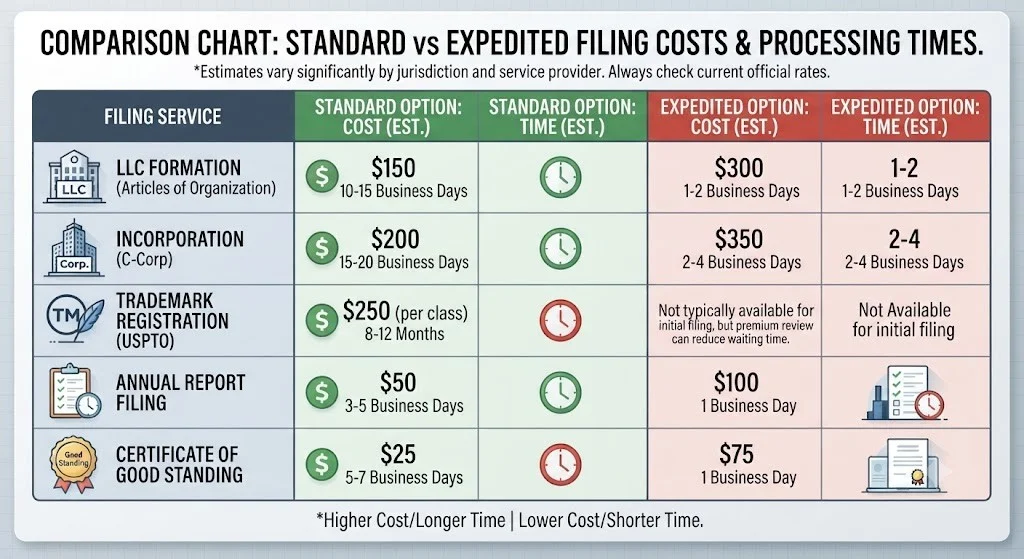
Standard processing is usually sufficient with good planning
Routine timelines have gotten better or held steady in lots of places, so if you plan ahead, you won't need expedited service. The paperwork checklist before filing a LLC covers mapping out your timeline so you don't have to scramble.
Business Formations. Most states get standard filings done in a few days to a couple of weeks. If you file online in places like Illinois or New York, it often wraps up within a week. You can pay extra for same-day or 24 hour service, which runs anywhere from $25 to $1,000 based on the state and how urgent you make it, but that's usually overkill unless a deal, loan, or regulatory deadline is right around the corner. Northwest Registered Agent puts it this way: "Standard processing is usually sufficient for most business formations."
Key Insight. Poor planning, underestimating timelines or last-minute decisions, is the top driver of speed up requests. Agencies often deny requests lacking genuine emergencies, and the request itself can add review time. The California Secretary of State states: "Standard processing times are estimates. Filing early is the best way to avoid delays."
Significant extra costs with diminishing returns
Expedited services cost extra, and that money’s gone once you pay it. It adds up fast, especially for complex filings. Inc Authority and other formation services push expedited processing as an upsell, but it just speeds up their own work, not the state’s.
Fees compound. Government charges, legal and attorney costs, and potential errors from rushed preparation all add up. In patents, expedited programs compress legal work into a shorter window, increasing short-term attorney fees. For business filings, same-day service in states like Delaware or California can cost hundreds to over $1,000 extra, valuable for time-sensitive mergers but wasteful for routine startups. Why is LegalZoom so expensive? Part of the cost comes from upsells like expedited filing that most people don't need.
For most people, the time you save on the margins just isn't worth the price. Standard processing works fine if you've got timelines built into your project plan. Plus, rushing invites mistakes. Incomplete forms, missing documents. Those cause rejections, and then you're stuck waiting even longer.
Quality and strategic considerations favor standard timelines
Faster isn't always better. The biggest mistake when choosing a LLC service is rushing through it and making errors you could've avoided.
Patents. Expedited examination might leave you with narrower claims or a less thorough review. Standard review gives you time to go broader, file continuations, or really think through prior art. It also staggers the costs and gives you some breathing room to build the product or test the market.
Immigration and Visas. speed up requests usually work for documented emergencies, like urgent humanitarian needs or government interests. Routine business or family cases rarely make the cut, and you'll often get denied if it just looks like impatience or bad planning. The USCIS puts it this way: "speed up requests are granted only in cases of severe financial loss, medical emergencies, or humanitarian reasons."
Overall Risk. Rushed filings make rejection more likely. A solid standard application, reviewed carefully, often sails through on the first attempt, so you skip amendments or appeals. But lots of expedited programs come with caps, eligibility limits, or tighter scopes, which can really shrink their usefulness.
Who does benefit from expedited filing?
A minority of cases genuinely warrant it. Comparing Inc Authority vs. ZenBusiness shows that both offer expedited options, but most customers don't need them.
Travel that's coming up fast with non-refundable tickets or passport emergencies. Deals that can't wait, funding rounds, or regulatory deadlines for LLC and corp filings. Startups that need IP certainty now for investors or to stop infringement. Inventions in fields that move quick like green tech or applicants who qualify for fee waivers or special status.
Even then, alternatives like Premium Processing where available, parallel filing strategies, or hiring pros for efficient standard submissions usually do the trick.
Better alternatives to expedited filing
Plan ahead. Build buffers into timelines. Apply for passports early. File business docs once the idea feels real. Your first 30 days after forming a LLC should be mapped out in advance, not thrown together at the last minute.
Use Online or Standard Channels. Most systems move digital submissions to the front of the line, and you won’t pay extra for it.
Prioritize Preparation. Solid applications cut out the back and forth. So talk to the pros early, don't wait till you're scrambling.
Monitor and Follow Up. Keep an eye on standard applications. During low volume times, plenty of them move quicker than the published averages.
Targeted Programs. Explore no- or low-cost petitions for special cases instead of broad speed up requests.
Frequently asked questions
For most people, no. Standard processing usually does the job if you plan ahead. Expedited filing only makes sense for time-sensitive deals, funding deadlines, or travel that’s coming up fast with non-refundable plans.
Expedited filing fees run anywhere from $25 to over $1,000, depending on where you are and how fast you need it. California will hit you for $350 to $750 if you want it same day. Delaware? That’s $100 to $1,000. For most states, 24 hour processing lands in the $50 to $150 range.
Yes, it can bump your filing to the front of the line in some states. But that doesn't mean you'll get approved faster if your application has mistakes. Getting things right matters more than rushing.