The price of good standing, why annual reports are the real cost of a LLC
Contents
You’ve paid your filing fees, snagged your EIN, and your first year is rolling. You’d think the pricey part of a LLC was done.
You are mistaken.
While the initial formation gets all the attention, the real long-term cost of running a LLC, the price you pay to keep your personal assets protected, comes down to one recurring chore: The Annual Report.
Most guides lump the annual report fee in with other small expenses. That’s a dangerous understatement. This isn’t just a fee. It’s the gateway to your company’s legal life, or death.
Here’s the unfiltered truth about Annual Reports, why they’re the real cost of your LLC, and how getting them wrong can wreck your business. For a bigger picture of what it actually costs to run a LLC every year, our annual costs of owning a LLC breakdown covers it all.
What is an annual report (really)?
At its core, an Annual Report (sometimes called a Biennial Statement, depending on your state) is just an update you file with the Secretary of State. It confirms your business is still around, your registered agent is current, and your principal address hasn't changed.
It’s not a financial report. The state doesn’t care about your revenue or profit at this stage. They just want your corporate info to be accurate and for you to pay your franchise tax or filing fee.
The true cost, it's not just the $50 fee
When you see "Annual Report: $50" on a state website, that's just the baseline state fee. The real cost of an annual report comes from three hidden factors nobody warns you about.
1. The compliance creep tax
The most expensive part of annual reports? They’re never the same. One year it’s one thing, the next it’s a whole different beast. That inconsistency adds up fast.
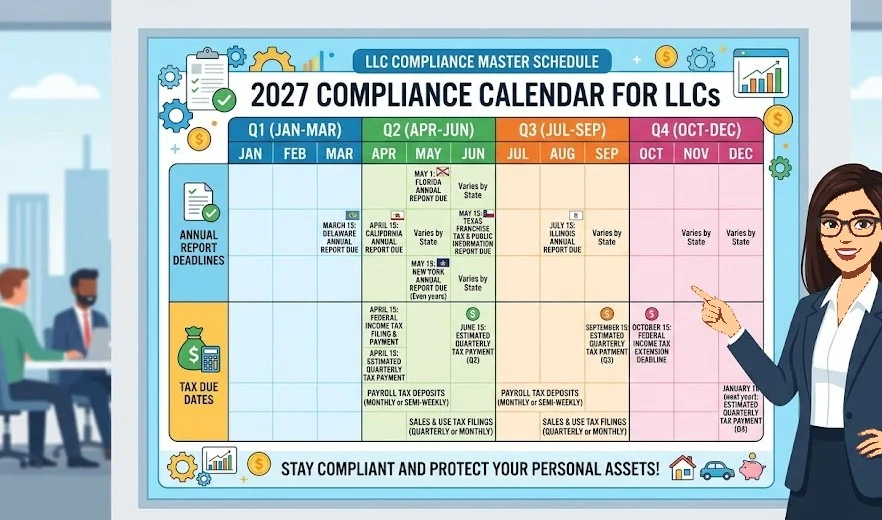
- Different Deadlines: Some states want your filing on the anniversary of your formation date. Others set one universal date, like all reports due by April 15th. And a few mix it up, staggering them by the first letter of your business name.
- Different Frequencies: Most states are annual, but some, like New York, are biennial. That means you pay double every two years.
- Different Names: If you operate in multiple states, you aren't just tracking "annual reports"; you're tracking "Statements of Information," "Periodic Reports," and "Annual Lists," each with different rules.
You can’t just set it and forget it. You need a solid internal tracking system just to know when you owe money. Services like Northwest Registered Agent offer compliance tracking that can help, but they charge a premium for it. Our Northwest Registered Agent review breaks down what you get for the price.
2. The severe "ignorance penalty"
This is where the real financial damage hits. Forget late fees, which can run anywhere from $25 to $500 depending on your state. The actual penalty for missing that annual report deadline? Administrative Dissolution.
If you don’t file your report for 60 or 90 days past the deadline, the state will formally dissolve your LLC.
What happens when your LLC gets administratively dissolved?
- Your corporate veil vanishes, and your personal assets are immediately exposed to business liabilities.
- You lose the legal right to use your business name. Anyone can swoop in and claim it.
- You can't sign new contracts, enforce ones you already have, or keep lawsuits going.
- You face an expensive, time consuming Reinstatement Process just to get your company back in good standing.
Forgetting a $50 filing can easily turn into $500+ in reinstatement fees, legal headaches, and a whole lot of chaos. That’s exactly why we wrote our how to avoid administrative dissolution article, so founders don’t fall into that trap.
3. The third-party trap
Because the system is complicated and the penalties are steep, a whole cottage industry of third-party compliance services has popped up. They’ll handle your annual reports for you.
The trap? These services use marketing that’s aggressive, even deceptive. They send letters that look official, like they’re from the government. New business owners get scared into paying $200 or $300 for a “corporate compliance service.” But that service is basically just filling out a $50 form online. So the true cost of your annual report can balloon, if you fall for those solicitations.
If you're after a real service to keep compliance in check, both Inc Authority and ZenBusiness bundle tracking into their plans. Inc Authority throws compliance alerts into their free filing package, but you'll need a paid tier for fuller support. ZenBusiness has a slicker dashboard, though the constant upsell nags can get old. For a closer look, our Inc Authority vs ZenBusiness breakdown covers the gaps.
The summary, the ongoing cost of your LLC shield
Forget the one-time setup cost. Your long-term budget has to cover the endless grind of keeping that "Good Standing."
| Cost Category | Low Estimate (Prudent) | High Estimate (Complex/Multi-State) |
|---|---|---|
| Average State Annual Report Fee | $50/year | $500+/year (e.g., California's $800 Franchise Tax) |
| Registered Agent Service | $100/year | $300/year (for premium service) |
| Internal Time/Labor Cost | 2 hours ($100 value) | 10+ hours ($500+ value) |
| Total Annual Maintenance | ~ $250 / year | ~ $1,300+ / year |
The creative takeaway? The LLC filing fee is just the down payment. The real cost of that corporate shield is the endless vigilance, the fees, and the admin grind of getting your Annual Reports filed right and on time. Treat every deadline like it matters, or your shield falls apart exactly when you need it.
If you're just starting out and want your compliance setup right from day one, our best LLC service for beginners guide can help you pick a provider that'll keep you on track.
The annual report is the one cost of owning a LLC that everyone forgets about. The $50 fee isn't the problem. It's the admin work, the constant tracking, and the nightmare penalty if you miss the deadline. So set up a system, get a service, or hire someone. Just don't blow it off. Your liability shield rides on that.
Frequently asked questions
Your LLC will get administratively dissolved by the state. That means you lose your liability protection, your business name, and you can’t enforce contracts. And to fix it, you’ll have to go through reinstatement, which costs you both time and money.
State filing fees vary a lot. Some states charge nothing, while California tops out above $500. Most land somewhere between $50 and $150. But that’s not the whole picture. You’ve also got your time, the systems you use to track things, and late fees if you slip up.
Most states ask for annual or biennial reports. A few, like Ohio, don't require them at all. So check what your state actually needs.
Yes, most states let you file online right through the Secretary of State’s website. The tricky part is actually remembering to do it. And if you’ve got entities in a few states, keeping up with all those different deadlines gets messy.