Legalzoom vs rocket lawyer
Contents
LegalZoom sells legal services like items off a shelf, one at a time. Rocket Lawyer runs legal coverage like a software subscription, where you get on demand access to attorneys.
Understanding this distinction is important before you choose either platform. If you're trying to understand how these two compare to a more traditional filing service, our Inc Authority vs LegalZoom comparison offers additional context.
1. Financial mechanics, transactional ala-carte vs. legal maintenance subscription
LegalZoom's Model (Transactional Retailer): LegalZoom pulls you in with a $0 base formation tier, plus state fees. Their real goal is making money off one-off buys or bundles, like their $249 Pro or $299 Premium tiers, and a separate $249/year Registered Agent service. You pay per transaction, per document package, or per specific service.
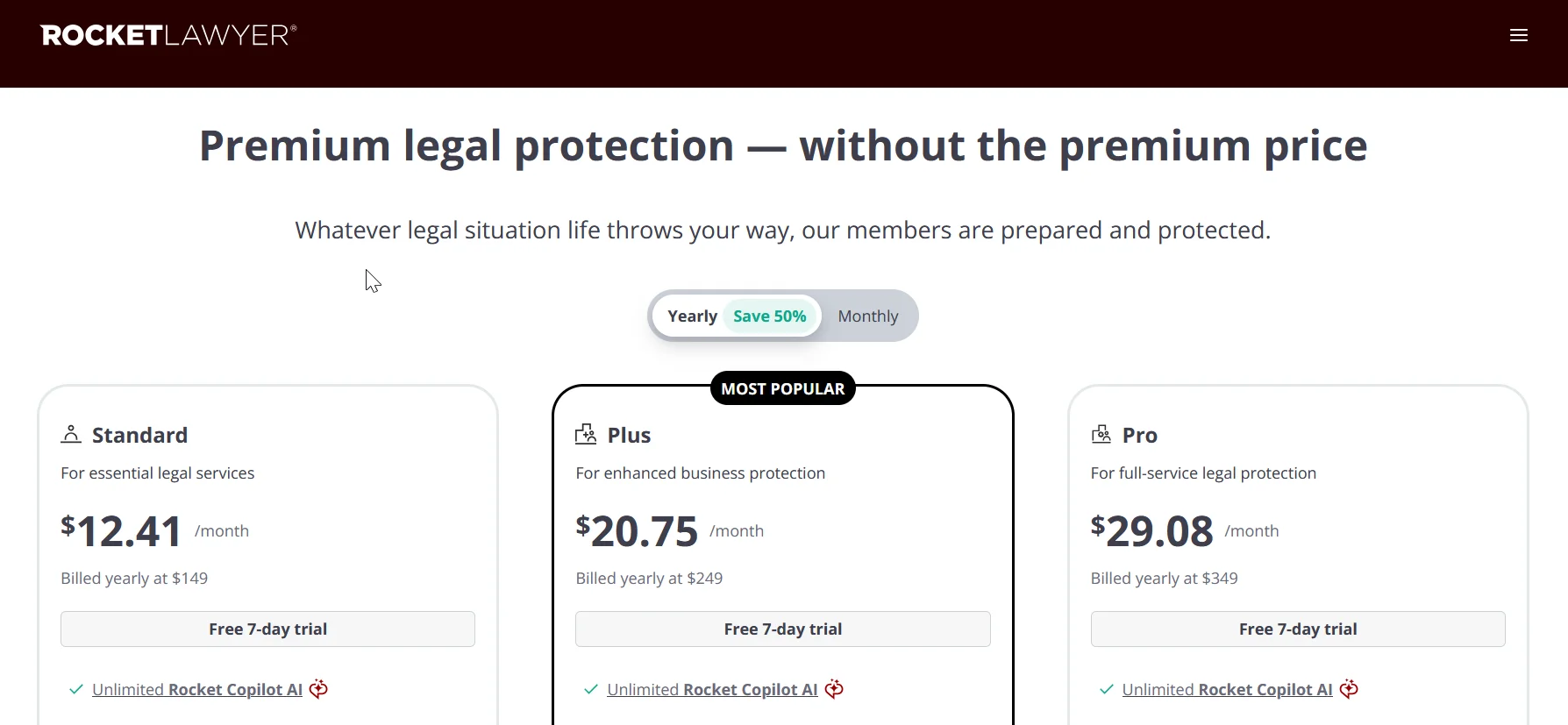
Rocket Lawyer's Model (Legal SaaS): Rocket Lawyer charges non-members $99 for formation, but drops the cost to $0 (+ state fees) if you sign up for their Rocket Legal membership ($39.99/month or $239.88/year). For members, ongoing services, like Registered Agent coverage ($124.99/year) and state filings, are heavily discounted.
If you’re looking at a year of ongoing contracts, NDAs, and attorney reviews, Rocket Lawyer’s subscription ends up costing way less overall than LegalZoom’s pay per document setup.
For a deeper look at pricing across all our services, the pricing comparison research has detailed tables and analysis.
2. Document creation, questionnaire-generated pdfs vs. living contract suite
LegalZoom (Static Document Delivery): LegalZoom usually runs on a survey style wizard. You answer questions one after another, and the system spits out a finished, static PDF or Word file. Want to tweak it or reuse a template? You’re often stuck filling out a fresh survey or keeping up a paid subscription to their forms library.
Rocket Lawyer (Interactive & Dynamic Engine): Rocket Lawyer works a lot like Google Docs, but it’s built just for legal agreements. You can create, edit, e-sign (via RocketSign), and store unlimited contracts right inside their cloud interface. The big one? Members get "Document Defense," where an attorney reviews your customized contract or steps in to enforce it if a dispute pops up.
If you're running an active business that generates contracts often, Rocket Lawyer's interactive document suite gives you a real edge over LegalZoom's static delivery model.
3. Attorney access, on-demand consultation vs. third-party referral network
LegalZoom: They offer 30-minute consultations with attorneys through their Legal Advisory Plan. But those often get pitched as an add-on during formation. Once your initial 30-day window expires, keeping access means paying for a separate ongoing subscription.
Rocket Lawyer: They bake direct attorney Q&A right into the core membership. Subscribers can post specific legal questions to network attorneys, or they can book 20-minute phone consults on new legal topics without paying extra. Now, if you're looking for complex litigation or formal representation, Rocket Lawyer hooks you up with a 33% to 40% discount on the participating attorney's hourly rate.
if you're looking for ongoing legal advice, Rocket Lawyer’s attorney access model fits better into your workflow and costs less than LegalZoom’s add-on setup.
4. Which ecosystem matches your business reality?
[Business Priority]
- • Single LLC filing or trademark
- • No ongoing contract needs
- • Prefers pay-per-use model
SELECT: LEGALZOOM
- • Regular client contracts and NDAs
- • Needs e-signatures and attorney Q&A
- • Prefers predictable subscription pricing
SELECT: ROCKET LAWYER
Choose legalzoom if,
- You want a big name brand to handle just one thing, like a basic LLC filing, a simple trademark registration, or an estate planning packet. And you’ve got zero interest in locking yourself into some monthly software subscription.
Choose rocket lawyer if,
- You run an active, growing business that regularly deals with client contracts, freelancer agreements, liability waivers, or ongoing legal questions, and you want an all-in-one platform with integrated e-signatures and discounted legal counsel.
If you’re still on the fence about which one’s right for you, our Rocket Lawyer review breaks down exactly what their subscription includes.
Financial & operational comparison
| Strategic Dimension | LegalZoom | Rocket Lawyer |
|---|---|---|
| Primary Business Model | Transactional Retailer | Legal SaaS Subscription |
| Base LLC Service Fee | $0 + State Fees | $99 + State Fees ($0 with membership) |
| 1st-Year Registered Agent | $249 / year (Add-on) | $124.99 / year (with membership) |
| Document Creation | Static PDFs (Survey-based) | Interactive, editable documents |
| Attorney Access | Add-on consultations | Included in membership |
| E-Signatures | Not included | Included (RocketSign) |
| Document Defense | Not included | Included (Attorney enforcement) |
| Ideal For | One-time legal transactions | Ongoing operational legal needs |
LegalZoom’s the better pick if you just need an one-time filing or document. Rocket Lawyer wins if you run an active business that churns out contracts regularly and wants ongoing attorney access. The subscription only makes sense if you’ll really use the legal services. Otherwise, LegalZoom’s pay-per-use route is cheaper.
Frequently asked questions
It depends on how you use them. For a single LLC filing, LegalZoom’s cheaper. But if you're looking for ongoing contracts and attorney access, Rocket Lawyer’s subscription model pays off the longer you stick with it.
Yes, they’re an add-on or a separate subscription. Rocket Lawyer includes attorney Q&an and consultations in their core membership.
Rocket Lawyer’s got way more advanced, interactive document tools, and e-signatures are built right in. LegalZoom just gives you static PDFs based on what you fill out.
Document Defense is Rocket Lawyer’s thing where a network attorney can step in to help you enforce or defend agreements you made here. LegalZoom doesn’t offer that.